
SaaS companies rely on their websites to get clients, explain products, generate leads, and convert users. But even excellent content can struggle to perform in search engines when a website has technical problems. This is where technical SEO for SaaS becomes important.
Technical SEO focuses on the infrastructure and technical elements that help search engines crawl, understand, and index a website. For SaaS businesses, this can become complex because websites often include product pages, feature pages, integrations, documentation, blogs, customer resources, and multiple landing pages.
What Is Technical SEO for SaaS?
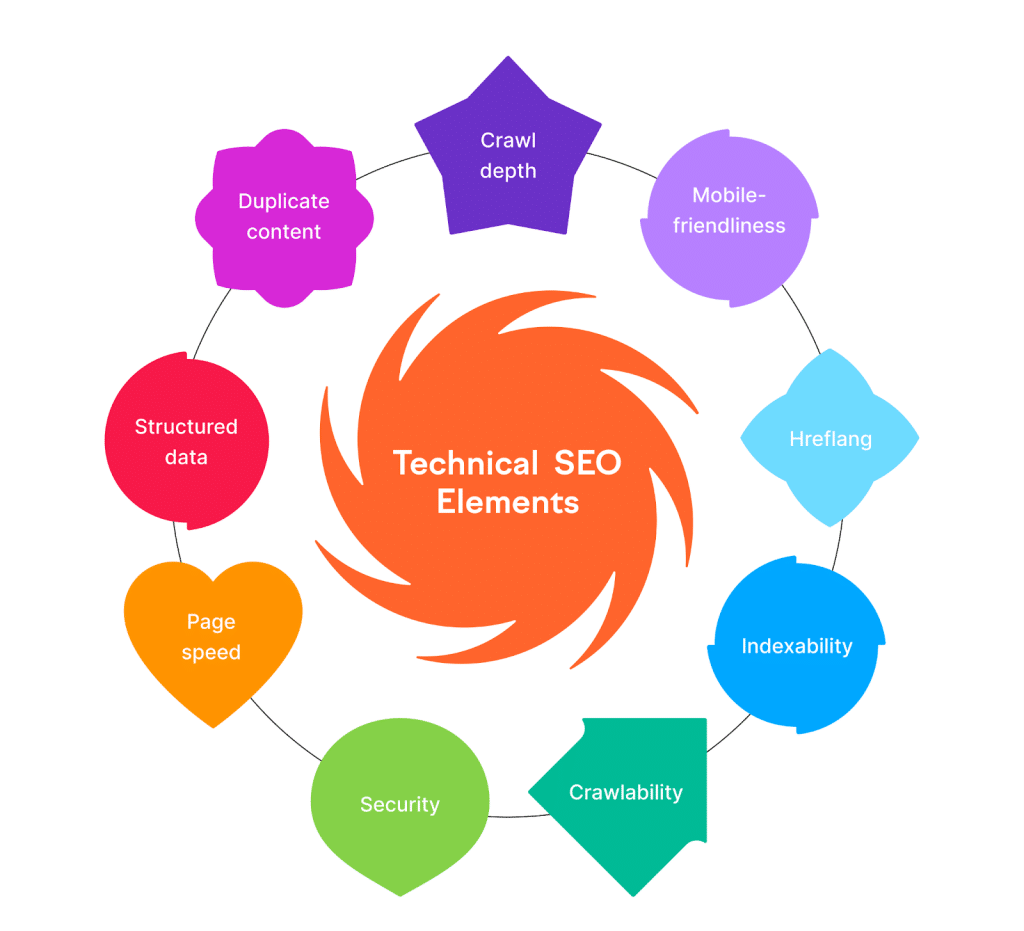
Technical SEO for SaaS is the process of optimizing the technical structure and performance of a SaaS website so that search engines can efficiently discover, crawl, understand, and index its important pages. It covers areas such as:
- Website architecture
- Crawling and indexing
- Page speed
- Mobile usability
- Internal linking
- Canonicalization
- XML sitemaps
- Robots.txt
- URL structure
- Structured data
- HTTPS
- JavaScript rendering
Technical SEO is different from content SEO. Content SEO focuses primarily on what a page says, while technical SEO focuses on how the website is built and accessed.
Related Article: How to Perform a Technical SEO Audit: A Complete Guide
Why Is Technical SEO Important for SaaS Companies?
SaaS websites can grow quickly, as a company may start with a few pages and eventually have hundreds or thousands of URLs covering products, features, integrations, industries, use cases, resources, and blog content. Without proper technical management, this can create problems.
A good technical foundation can help:
- Search engines discover important pages
- Important pages get indexed correctly
- Users navigate the website more easily
- Pages load efficiently
- Duplicate URLs are managed
- Website authority flows between related pages
- SEO problems are identified earlier
For technical SEO for SaaS companies, scalability is important. The website should be able to grow without creating technical complexity.
Key Elements of SaaS Technical SEO
SaaS Site Architecture
SaaS site architecture refers to how pages are organized and connected across a website. A logical structure could look like:
- Homepage
- Product
- Features
- Use Cases
- Resources
- Blog
For a multi-product SaaS company, the structure might instead be:
- Homepage
- Products
- Product Pages
- Features
- Integrations
Important pages should be easy to reach through navigation and internal links.
Crawling and Indexing
Search engines need to crawl your website before they can understand its pages. During a saas seo audit, check whether important pages are:
- Crawlable
- Indexable
- Internally linked
- Included in relevant sitemaps
- Free from accidental no-index directives
Also identify pages that should not be indexed. For example, certain internal search results, temporary URLs, or duplicate parameter pages may not need to appear in search results.
Robots.txt
The robots.txt file provides crawling instructions to search engine bots. For SaaS websites, review it carefully to ensure that important areas such as product, feature, and resource pages are not accidentally blocked.
A simple configuration error can prevent crawlers from accessing large sections of a website. However, robots.txt should be used primarily for crawl control rather than as the main method for keeping pages out of search indexes.
XML Sitemaps
An XML sitemap provides search engines with a list of URLs that you want them to discover. A SaaS sitemap should prioritize important, canonical, indexable URLs. For this, it’s important to check:
- URLs are correct
- Pages return successful status codes
- Redirected URLs are excluded
- Noindex pages are excluded
- Duplicate URLs are avoided
- The sitemap is regularly updated
URL Structure
Clean URLs help users and search engines understand page topics. For example: example.com/features/automation is easier to understand than: example.com/page?id=7829. Use consistent URL structures across products, features, integrations, and resources.
Canonicalization
SaaS websites can sometimes generate multiple URLs with similar or duplicate content. Canonical tags can help communicate which version should be considered the preferred URL. Review canonical implementation across:
- Product pages
- Feature pages
- Integration pages
- Parameter URLs
- Content pages
- Duplicate variations
Page Speed and Core Web Vitals
Website performance is an important part of the user experience. Therefore, its important to monitor Core Web Vitals and other performance metrics, including:
- Largest Contentful Paint (LCP)
- Interaction to Next Paint (INP)
- Cumulative Layout Shift (CLS)
SaaS websites should also pay attention to heavy JavaScript, large images, third-party scripts, and slow server responses. Improving performance can create a better experience for visitors.
Mobile Optimization
A SaaS website should work effectively across mobile devices in terms of:
- Navigation
- Text readability
- Buttons
- Forms
- Tables
- Images
- Interactive elements
- Page layout
Internal Linking
Internal links connect related pages and help users discover additional information. For example, a blog post about CRM automation could link to:
- CRM automation features
- CRM software
- Workflow automation
- Product demo pages
A good internal linking system also helps search engines understand the relationships between pages. This is particularly useful for technical SEO for SaaS websites with large content libraries.
JavaScript SEO
Many SaaS websites use JavaScript frameworks to create interactive experiences.
JavaScript itself is not necessarily an SEO problem. However, important content and links need to be accessible to search engines such as:
- Important content is rendered correctly
- Search engines can discover important links
- Key page elements are not dependent on inaccessible interactions
- Client-side rendering does not hide essential content
- Important pages have crawlable URLs
HTTPS and Security
SaaS companies often handle sensitive business and customer information. Make sure the website uses HTTPS correctly and check for:
- Valid SSL certificates
- HTTP-to-HTTPS redirects
- Mixed content
- Secure canonical URLs
- Secure internal links
Structured Data
Structured data helps search engines understand specific types of information. Depending on the website, SaaS businesses may use relevant structured data for:
- Organization information
- Products
- Software applications
- Articles
- Breadcrumbs
- Reviews where applicable
Technical SEO for B2B SaaS
Technical SEO for B2B SaaS requires additional focus on complex website structures and long buyer journeys. B2B SaaS websites often contain:
- Multiple product categories
- Industry pages
- Use-case pages
- Integration pages
- Resource libraries
- Case studies
- Documentation
- Comparison pages
These sections should have clear relationships and consistent internal linking. For example, an industry page can link to relevant use cases, features, case studies, and product pages. This creates a logical pathway for both search engines and potential customers.
How to Perform a SaaS Technical SEO Audit
A technical SEO audit for SaaS should follow a structured process like:
- Crawl the Website
- Review Google Search Console
- Check Website Architecture
- Analyze Performance
- Review Indexation
- Prioritize Issues
6 Common Technical SEO Mistakes in SaaS
- Indexing Everything
- Ignoring Website Architecture
- Creating Duplicate Feature Pages
- Forgetting Old URLs
- Ignoring JavaScript
- Treating Technical SEO as a One-Time Task
Conclusion
Technical SEO for SaaS is about creating a website that search engines can efficiently crawl, understand, and index while providing a strong experience for users.
For SaaS businesses, this becomes especially important as websites grow to include products, features, integrations, resources, blogs, and industry-specific pages.
A good technical strategy should cover site architecture, crawling, indexing, URLs, canonicalization, sitemaps, internal links, performance, mobile usability, JavaScript, security, and structured data.
Frequently Asked Questions
1. Can technical SEO improve SaaS website rankings?
Yes. A technically healthy website helps search engines crawl and understand important pages, which can support better organic visibility.
2. Why is technical SEO important for SaaS websites?
It helps ensure important product, feature, integration, and content pages can be properly discovered and indexed by search engines.
3. How often should a SaaS website have a technical SEO audit?
A SaaS website should be monitored regularly, with detailed audits performed periodically and after major website changes or migrations.
4. What should a SaaS technical SEO checklist include?
It should include crawling, indexing, site architecture, URLs, sitemaps, canonical tags, redirects, internal links, performance, mobile usability, JavaScript, and structured data.