

Building a strong social media presence requires more than posting regularly. Businesses need people who can plan content, understand audiences, create engaging visuals, manage communities, analyze performance, and adjust strategy when results change. That is why having the right social media marketing team can make a major difference. A well-organized team gives each person clear responsibilities while ensuring everyone works toward the same business goals.
Whether you are building an in-house team or outsourcing some functions, understanding the right social media team roles, structure, and goals helps prevent duplicated work. So read more to know how to build a social media marketing team.
What Is a Social Media Marketing Team?

A social media team is a group of professionals responsible for planning, creating, publishing, managing, and measuring a company’s social media activity.
Depending on the size of the business, one person may handle several responsibilities, while larger organizations may have specialists for each function. Some responsibilities include:
- Social media strategy
- Content planning and creation
- Copywriting
- Graphic design and video production
- Community management
- Paid social advertising
- Analytics and reporting
The goal is not to increase followers. A successful team connects social media activity with broad business objectives such as brand awareness, website traffic, lead generation, customer engagement, or sales.
Related Article: 10 Proven Tips to Get More Social Media Followers in 2026
Key Social Media Team Roles

The ideal structure depends on your company’s size, budget, platforms, and goals. However, these are some of the most important social media team roles and responsibilities to consider.
Social Media Manager
The social media manager oversees the overall strategy and day-to-day operation. Their responsibilities may include:
- Developing the social media strategy
- Managing the content calendar
- Coordinating team members
- Monitoring platform performance
- Maintaining brand consistency
- Reporting results to management
They connect the different parts of the team and make sure social activity supports business objectives.
Content Strategist
A content strategist determines what the brand should publish, who it should target, and why.
They research audience interests, competitors, trends, and content opportunities before turning those insights into a structured plan.
This role is particularly important when businesses want social media to support SEO, lead generation, or broader content marketing campaigns.
Copywriter
A copywriter turns ideas into captions, posts, scripts, hooks, and other written content.
Good social media copy should match the platform and audience rather than simply promoting a product. The copywriter may also develop different messaging for awareness, engagement, consideration, and conversion campaigns.
Graphic Designer and Video Creator
Visual content is important to many social platforms. Designers create graphics, carousels, infographics, advertisements, and branded visuals, while video creators may produce short-form videos, product demonstrations, interviews, or educational content.
Community Manager
The community manager focuses on conversations with the audience. Their responsibilities can include responding to comments and messages, monitoring brand mentions, answering questions, identifying customer concerns, and encouraging meaningful conversations.
Paid Social Specialist
If the business runs paid campaigns, a paid social specialist can manage audience targeting, campaign setup, budgets, creative testing, and performance optimization.
This role becomes valuable when advertising spend is significant and campaigns need continuous testing and measurement.
Social Media Analyst
The analyst focuses on performance data. They track metrics such as reach, engagement, clicks, conversions, follower growth, and advertising performance. Their job is not simply to produce reports but to identify what the data suggests the team should do next.
How to Structure a Social Media Team
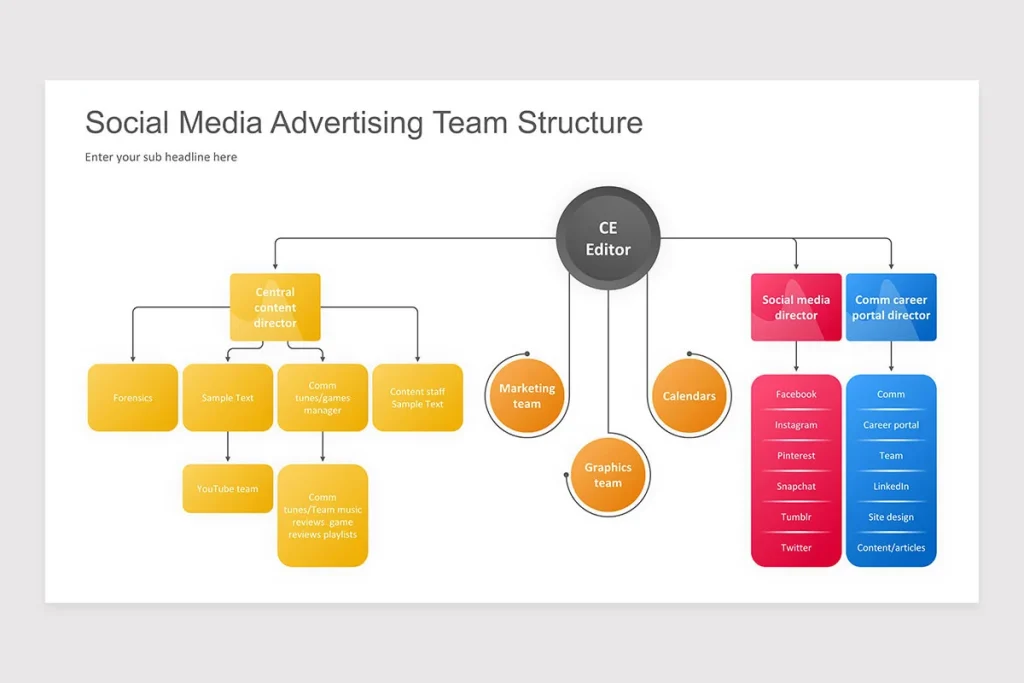
There is no single perfect social media team structure. The right setup depends on the organization’s needs.
Small Business
A small business may only need two or three people:
- Social Media Manager
- Content Creator
- Designer/Video Editor
One person may perform multiple functions. For example, the social media manager could also handle strategy, publishing, community management, and analytics.
Growing Business
As activity increases, the structure can become more specialized:
- Social Media Lead
- Content Strategist
- Copywriter
- Designer/Video Creator
- Community Manager
- Paid Social Specialist
Not every role needs to be a full-time position. Some businesses use freelancers or agencies for specialized work.
Larger Organization
A larger company may have separate teams for organic social, paid advertising, creative production, influencer marketing, community management, and analytics.
The important thing is to establish clear ownership so that every responsibility has someone accountable for it.
How to Create a Social Media Marketing Plan

A strong team still needs a clear plan. Learning how to create a social media marketing plan starts with defining what the business actually wants social media to achieve. Start with these steps:
Define Your Goals
Choose measurable objectives instead of unclear goals such as “get more engagement.” For example:
- Increase qualified website traffic
- Generate leads
- Improve brand awareness
- Increase product inquiries
- Build an engaged community
Your goals will determine what content you create and which metrics matter.
Identify Your Audience
Understand who you are trying to reach, including their needs, interests, problems, and preferred platforms.
For example, a B2B software company may require a very different content strategy from a fashion or consumer brand.
Choose the Right Platforms
You do not need to be active everywhere. Select platforms based on where your target audience spends time and what type of content your team can consistently produce.
Build a Content Calendar
A content calendar gives the team visibility into what is being published and when. It should include topics, formats, platforms, deadlines, responsible team members, and campaign objectives.
Measure and Improve
Review performance regularly and use the findings to improve future content. A post receiving high reach but few clicks may require a different call to action, while content generating strong engagement can provide ideas for future posts.
Social Media Team Management For Workflow Alignment
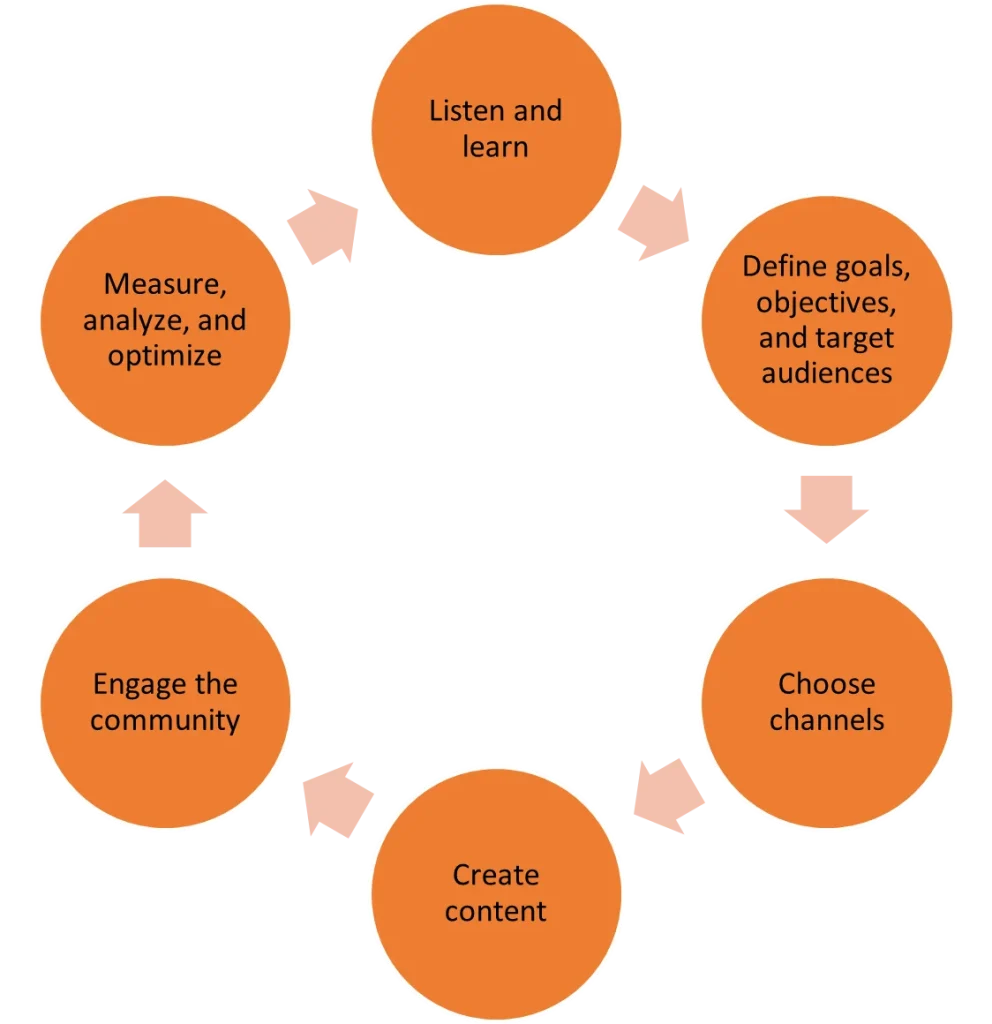
Effective social media team management requires more than assigning tasks, it requires creating a clear workflow covering:
- Brief
- Content Creation
- Review
- Approval
- Publishing
- Monitoring
- Reporting
Every team member should know what they are responsible for and when their work needs to be completed.
A shared content calendar and project management system can also reduce communication gaps and prevent last-minute publishing problems.
Final Thoughts
A successful social media marketing team is built on clear responsibilities, realistic goals, and a reliable workflow.
You do not need a large team to get started. A small business can combine several social media team roles into a few positions and gradually add specialists as its social presence grows.
The goal is to make sure strategy, content, creative work, community management, and performance analysis work together rather than operating as separate activities.
When every person understands their role and the team understands its goals, social media becomes a structured marketing function rather than simply another place to publish content.
FAQs
1. What roles should a social media marketing team have?
A social media marketing team includes a social media manager, content strategist, copywriter, designer or video creator, community manager, and paid social specialist. Smaller businesses can combine several roles.
2. How do you structure a social media team?
Structure your social media team around your business goals, platforms, content volume, and budget. A small team may have two or three people, while larger teams can use dedicated specialists for content, creative, community management, paid media, and analytics.
3. How do you create a social media marketing plan?
Start by defining measurable goals, identifying your target audience, selecting relevant platforms, creating a content calendar, assigning responsibilities, and tracking performance. Review the results regularly and adjust the plan based on what works.
4. What are the main responsibilities of a social media team?
The main responsibilities include developing strategy, creating and publishing content, managing online communities, responding to audiences, running paid campaigns, monitoring trends, analyzing performance, and improving social media activity based on results.