
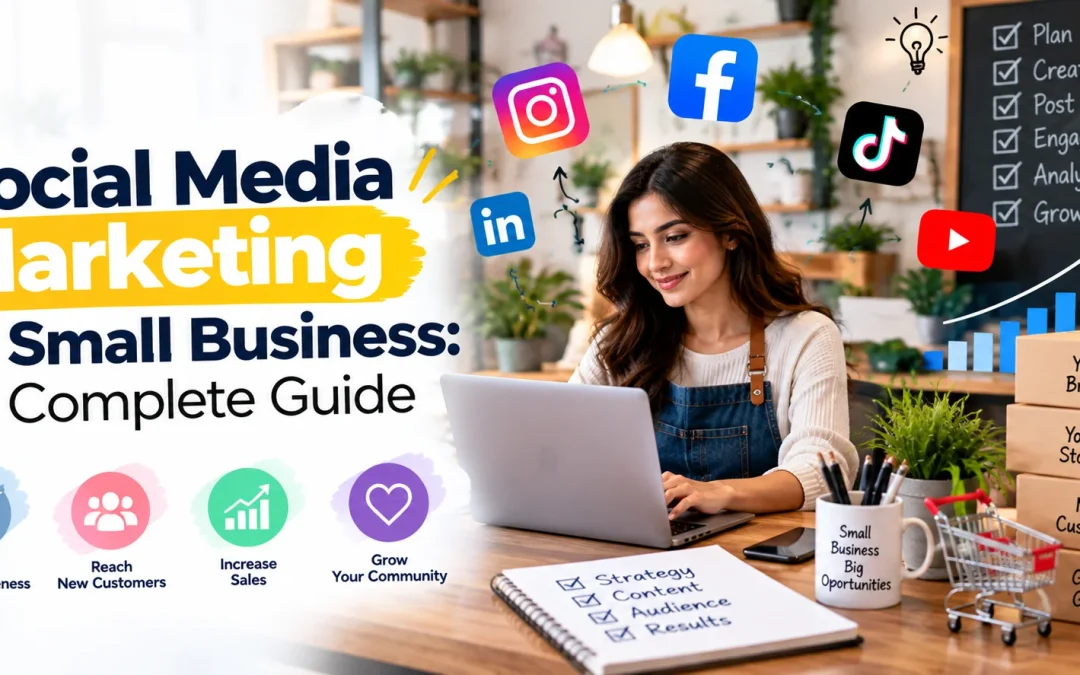
For a small business, social media can be one of the most accessible ways to build awareness, reach customers, and develop relationships with an audience. However, simply creating accounts and posting occasionally does not guarantee results. Effective social media marketing for small business requires a clear audience, consistent content, realistic goals, and a strategy that fits the resources available.
Whether you run a local business, online store, professional service, or startup, the right approach can help you stay visible online without requiring the budget of a large company.
So, keep on reading to explore all about social media marketing for small businesses.
Why Social Media Marketing Matters for Small Businesses
Small businesses often have limited marketing budgets, making channels useful that allow exact targeting and measurable results. Social media can help businesses:
- Build brand awareness
- Reach potential customers
- Showcase products or services
- Drive website traffic
- Generate inquiries and leads
- Build customer relationships
- Understand audience interests
The objective should not simply be to get more followers. Your social presence should contribute to your business goal, whether that is generating leads, increasing sales, getting customers to a physical location, or building brand recognition.
How to Use Social Media for Small Business Marketing
The first step is deciding what you want social media to accomplish. A small business should begin with a few clear questions:
Who are my customers?
Understand their needs, problems, interests, location, and buying behavior.
What do I want them to do?
Your goal could be visiting your website, sending a message, booking a service, requesting a quote, or making a purchase.
Where does my audience spend time?
You do not need to maintain every social platform. Focus on the channels that are relevant to your audience and business.
What can I consistently create?
Choose content formats your team can produce regularly without compromising quality. These answers form the foundation of your small business social media strategy.
Choose the Right Social Media Platforms
Being active on every platform is not an advantage.
For example, Instagram can be useful for visually driven businesses, LinkedIn may be more relevant for B2B companies, and TikTok can provide opportunities for short-form video discovery.
The right choice depends on your audience and industry. Start with one or two platforms where your customers are most likely to engage. Once your process becomes manageable, you can expand gradually.
Related Article: How To Build a Social Media Marketing Team: Roles And Goals
Build a Simple Content Strategy

One of the most effective social media marketing strategies for small businesses is creating content around different audience needs instead of promoting your product in every post. Consider four broad content categories:
Educational Content
Answer common customer questions, explain industry concepts, and share useful tips.
Product or Service Content
Show what you offer, how it works, and what makes it relevant to your target customer.
Social Proof
Share testimonials, customer experiences, case studies, reviews, or behind-the-scenes results where appropriate.
Engagement Content
Use questions, polls, discussions, and interactive formats to encourage your audience to participate.
This mix keeps your social channels useful rather than turning them into a constant stream of advertisements.
Social Media Marketing Tips for Small Business
A small business does not need to publish dozens of posts every week. Consistency and relevance matter more than simply increasing volume. Here are practical social media marketing tips for small business owners:
Create Strong Hooks
The first line or few seconds of your content should give people a reason to continue reading or watching.
Instead of starting with a generic product announcement, lead with a problem, question, insight, etc.
Show the People Behind the Business
Customers often connect with businesses through their people and stories. Behind-the-scenes content, team introductions, processes, and founder-led videos can make a brand feel more approachable.
Repurpose Good Content
A useful blog post can become a carousel, short video, quote graphic, email topic, or series of social posts. Repurposing allows small teams to get more value from content they have already created.
Use Clear Calls to Action
Tell people what to do next. Depending on your goal, that could be visiting your website, sending a message, booking a consultation, or learning more.
Monitor Performance
Track the metrics that relate to your goals instead of focusing only on follower counts. Reach, engagement, clicks, leads, conversions, and customer inquiries can provide more useful insights into whether your strategy is working.
Social Media Advertising for Small Business
Organic content is only one part of social media marketing. Social media advertising for small business can help you reach specific audiences beyond your existing followers. Paid campaigns can be used for objectives such as:
- Website traffic
- Lead generation
- Product sales
- Brand awareness
- Retargeting previous visitors
Start with a clearly defined objective and a controlled budget. Test different audiences, messages, creatives, and calls to action before increasing spending. Paid advertising should complement your organic strategy rather than replace it.
Affordable Social Media Marketing for Small Business
You do not need a large marketing budget to establish a useful social media presence. Affordable social media marketing for small business can involve:
- Creating content internally
- Using simple design tools
- Repurposing existing content
- Focusing on a small number of platforms
- Using organic content before scaling paid campaigns
- Outsourcing only specialized tasks
The most cost-effective approach is the one that focuses resources on activities most closely connected to your business objectives.
Small Business Social Media Management
Consistent execution is where many small businesses struggle. Small business social media management should include a basic workflow for planning, creating, reviewing, publishing, monitoring, and reporting.
A simple monthly content calendar can organize:
- Content topics
- Publishing dates
- Platforms
- Content formats
- Responsible team members
- Campaigns
- Calls to action
Social Media Marketing for Startups
For startups, social media can support more than brand awareness. It can help communicate a new product, educate an unfamiliar market, collect feedback, and build an early community.
However, startups should avoid trying to appear everywhere immediately. A focused social media marketing for startups strategy can begin with one clear audience, one or two relevant platforms, and content built around the problems the product solves.
As the business learns more about its audience, their strategy can evolve.
Final Thoughts
Successful social media marketing for small business does not require a massive team or unlimited budget. It requires a clear strategy, consistent execution, relevant content, and regular performance analysis.
Start with a defined audience and business goal. Choose the platforms that matter, create useful content, experiment with paid promotion when appropriate, and measure outcomes beyond follower numbers.
The goal is not simply to be visible on social media. It is to build a presence that contributes to sustainable business growth.
FAQs
1. What is social media marketing for small businesses?
Social media marketing for small businesses uses platforms such as Instagram, Facebook, LinkedIn, and TikTok to build awareness, engage customers, generate leads, and support sales.
2. How can a small business market itself on social media?
A small business can market itself by choosing the right platforms, creating useful content, engaging with its audience, showcasing products or services, and using paid advertising when appropriate.
3. What is the best social media strategy for a small business?
The best strategy depends on the business, audience, and goals. A focused approach with consistent content, clear calls to action, audience engagement, and regular performance tracking is a practical starting point.
4. How much does social media marketing cost for a small business?
Social media marketing costs vary based on whether work is handled in-house, outsourced, or supported by an agency. Costs can include content creation, management, advertising, design, and video production.