
When people search for products, services, or information online, search engines determine which pages appear in the results. Businesses that consistently appear for relevant searches can get visitors without paying for every individual click. This is where organic SEO becomes important.
SEO focuses on improving a website’s visibility in unpaid search results through content, technical optimization, keyword targeting, website structure, and authority building. Unlike paid search advertising, organic search traffic does not require a direct payment for every click.
In 2026, businesses need an SEO approach that focuses not only on rankings but also on relevance, helpful content, user experience, and sustainable search visibility.
What Is Organic SEO?
Organic search engine optimization is the process of improving a website’s visibility in unpaid search engine results to attract relevant visitors. It involves optimizing different aspects of a website, including:
- Content
- Keywords
- Technical performance
- Internal linking
- Website structure
- User experience
- Backlinks and authority
- Search intent
The goal is to help search engines understand a website while providing useful information that satisfies users’ search needs.
How Does Organic SEO Work?
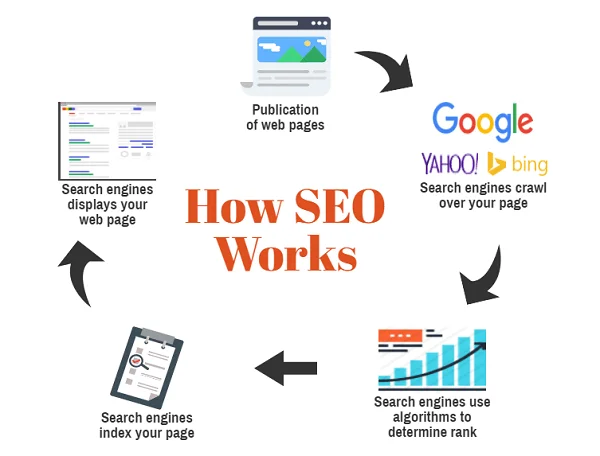
SEO works by improving a website’s relevance, accessibility, quality, and authority so that search engines can better understand and evaluate its pages. A basic process looks like this:
- Research
- Create
- Optimize
- Publish
- Measure
- Improve
Businesses identify what their audience searches for, create useful content, optimize the website, monitor performance, and continuously improve important pages.
Step 1: Research Your Audience and Keywords
Every effective SEO strategy starts with understanding your target audience. Start by identifying:
- What your audience needs
- What problems they have
- What products or services they search for
- Questions they ask
- Words they use when searching
Keyword research tools can help identify relevant search terms and provide information about search demand and competition. Do not focus only on keywords with high search volume. Specific, relevant keywords can attract more qualified visitors.
Step 2: Understand Search Intent
Search intent refers to the reason behind a search. For example:
Informational: “What is organic SEO?”
Commercial: “best SEO agency”
Transactional: “buy SEO software”
Navigational: “Google Search Console”
Your content should match the intent behind the keyword. A user searching for an explanation should not be directed to a page that only contains a sales pitch.
Related Article: 10 Best SEO Reporting Tools in 2026
Step 3: Create Useful Content
Content is a major part of SEO marketing. Create resources that answer genuine questions and solve problems for your target audience. Useful formats include:
- Blog posts
- Guides
- Tutorials
- Case studies
- Comparison pages
- Product pages
- Service pages
- Industry resources
- Original research
The objective is not to publish as much content as possible. Focus on creating content that is accurate, useful, easy to understand, and relevant to your audience.
Step 4: Optimize Your Website
On-page optimization helps search engines and users understand your content. Important areas include:
Title Tags: Create clear titles that accurately describe the page.
Headings: Use H1, H2, and H3 headings to organize information logically.
URLs: Keep URLs descriptive and concise.
Internal Links: Connect related pages to help users navigate your website and discover additional information.
Meta Descriptions: Write useful descriptions that accurately summarize the page and encourage relevant clicks.
Content: Use your primary keyword and related terms naturally without keyword stuffing.
Step 5: Improve Technical SEO
Technical optimization is another essential part of organic search engine optimization management. Important areas include:
- Website speed
- Mobile usability
- Crawlability
- Indexing
- XML sitemaps
- Canonical URLs
- Redirects
- Broken links
- Duplicate content
- Website architecture
A technically sound website makes it easier for search engines to discover, crawl, and understand pages.
Step 6: Build Website Authority
Search visibility can also be supported by credible external references. Businesses can build authority through:
- Digital PR
- Original research
- Industry publications
- Expert contributions
- Relevant partnerships
- High-quality backlinks
Step 7: Improve Existing Content
SEO is not only about creating new pages. Review existing content and identify pages that:
- Have lost rankings
- Have outdated information
- Receive impressions but few clicks
- Rank on the second page
- Have declining organic traffic
- Could better satisfy search intent
Updating and improving existing content can be an important part of long-term SEO growth.
Organic SEO Techniques to Increase Organic Traffic
Several SEO techniques to increase organic traffic can support sustainable growth such as.
Target Long-Tail Keywords: Specific keywords often have lower competition and can attract highly relevant visitors.
Build Topic Clusters: Create connected content around important topics instead of publishing unrelated articles.
Strengthen Internal Linking: Link relevant pages together to create a logical website structure.
Optimize Existing Pages: Improve pages that already have search visibility but are not performing as strongly as they could.
Create Original Content: Research, expert insights, original statistics, and unique resources can help differentiate your website.
Improve Click-Through Rates: Test titles and meta descriptions to make search results more useful and compelling.
Fix Technical Problems: Resolve indexing, crawling, performance, and structural issues that could limit visibility.
These SEO techniques should work together rather than being treated as isolated activities.
Benefits of SEO for Businesses
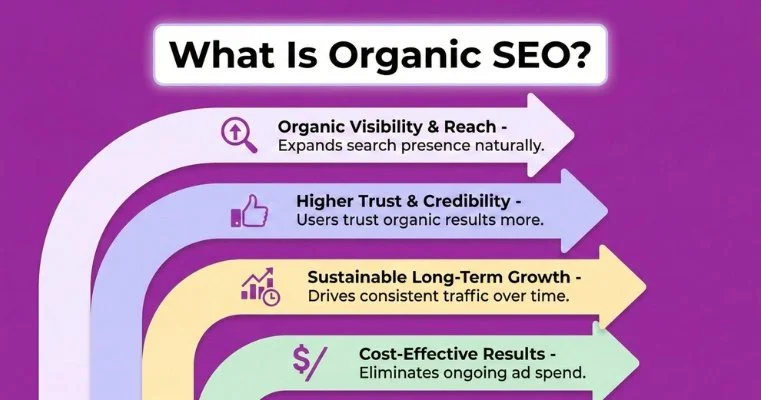
There are several benefits of SEO for businesses that invest in organic search including:
- Long-Term Visibility
- Qualified Traffic
- Brand Awareness
- Cost Efficiency
- Sustainable Growth
What Is Natural SEO?
Natural SEO, sometimes used to describe SEO, refers to improving search visibility through legitimate optimization practices rather than manipulating search engines. Natural SEO focuses on:
- Useful content
- Relevant keywords
- Good website structure
- Strong user experience
- Technical health
- Genuine authority
Final Verdict
Organic SEO is a long-term approach to improving visibility in unpaid search results and attracting relevant website visitors. A successful strategy combines keyword research, search-intent analysis, useful content, technical SEO, on-page optimization, internal linking, authority building, and continuous performance analysis.
The most effective approach is not simply to chase rankings. Businesses should focus on becoming the best and most relevant answer for the searches that matter to their audience.
Frequently Asked Questions
1. Why is organic SEO important?
SEO is the process of improving a website’s unpaid search visibility to attract relevant traffic from search engines.
2. How long does SEO take to work?
SEO results vary by competition, website authority, content quality, and technical health. Meaningful results generally require consistent effort over several months.
3. How can I increase organic traffic?
Focus on relevant keywords, useful content, technical SEO, internal linking, website authority, and regularly updating important pages.
4. Is SEO better than paid advertising?
There is no universal answer to this. Paid advertising can provide faster visibility, while SEO can build sustainable search traffic over the long term.