
Getting a website to rank in search engines requires more than publishing content and adding keywords. Each page needs to be structured and optimized so that search engines can understand its topic while users can easily find the information they need. This is where the on-page SEO process comes in. On-page SEO focuses on optimizing elements within a webpage, including its content, headings, title tag, meta description, URLs, images, internal links, and overall structure.
What Is On-Page SEO?
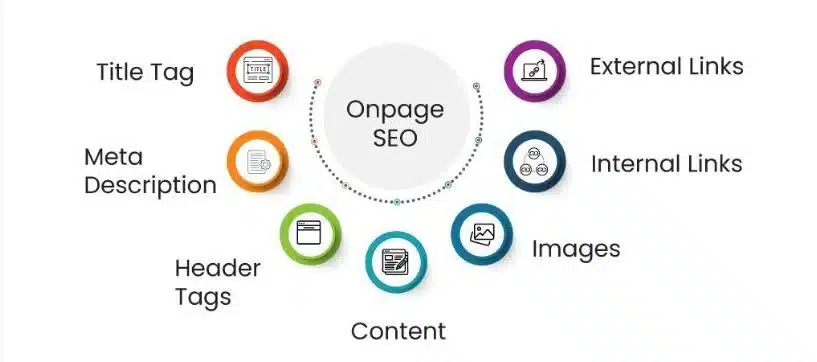
On-page SEO is the practice of optimizing individual webpages to improve their relevance, usability, and visibility in search engine results. It includes both content-related and technical elements that exist directly on the page. Common areas include:
- Keyword usage
- Content quality
- Title tags
- Meta descriptions
- Headings
- Internal links
- Images
- URLs
- Search intent
- Page structure
Unlike off-page SEO, which focuses on external signals such as backlinks, on-page SEO primarily involves changes you can make directly to your website.
Related Article: What Is White Label SEO? How It Works?
What Is the On-Page SEO Process?
The on-page SEO process can be broken down into several steps:
- Keyword Research
- Search Intent
- Content
- Optimization
- Internal Linking
- Review
- Monitoring
Let’s look at each step.
1. Start With Keyword Research
Before optimizing a page, identify the primary keyword and related search terms you want the page to target. For example, if your primary keyword is “on-page SEO process,” related terms could include:
- On-page SEO techniques
- On-page optimization
- On-page SEO checklist
- How to do on-page SEO
Choose keywords based on relevance and search intent rather than simply selecting terms with the highest search volume.
2. Understand Search Intent
Search intent is the reason behind a user’s search. For example, someone searching “how to do on-page SEO” is likely looking for instructions, while someone searching for “on-page SEO services” may be looking for a provider.
Your content should satisfy the intent behind the target keyword. Before writing or optimizing a page, review the types of results already appearing for the keyword and determine what information users expect.
3. Create Helpful, Relevant Content
SEO content optimization should start with the reader. Your content should:
- Answer the user’s question
- Provide accurate information
- Be easy to understand
- Cover the topic sufficiently
- Use relevant examples
- Avoid unnecessary repetition
Avoid writing content simply to reach a particular word count. The appropriate length depends on the topic and search intent.
4. Optimize the Title Tag
Title tag optimization is one of the most important on-page SEO factors. Your title should clearly communicate what the page is about and naturally include the primary keyword where appropriate.
For example: What Is On-Page SEO Process? Complete Guide. Avoid keyword stuffing or writing titles that do not represent the page accurately.
5. Write a Useful Meta Description
Meta description optimization involves creating a concise summary of the page. A good meta description should:
- Explain what users will find
- Include the primary topic naturally
- Encourage relevant clicks
- Accurately represent the page
Search engines may sometimes generate their own snippets, so there is no guarantee that your exact meta description will always appear.
6. Use a Clear Heading Structure
An effective SEO heading structure makes content easier to scan. Therefore, use:
- H1 for the primary page heading
- H2 for major sections
- H3 for supporting subsections
Headings should organize the content logically rather than being used simply to insert keywords.
7. Optimize Your Content for Keywords
Keyword optimization means using relevant search terms naturally throughout your page. Consider using the primary keyword in areas such as:
- Title
- H1
- Introduction
- Relevant headings
- Body content
- URL
- Image alt text when genuinely relevant
Also use related terminology where it naturally fits. Avoid forcing keywords into every paragraph. Search engines can understand topics through context and related terms, so writing naturally is more important than achieving a specific keyword density.
8. Add Internal Links
Internal linking SEO connects one page on your website to another relevant page on the same domain. Internal links can help:
- Users discover related information
- Search engines discover pages
- Establish relationships between topics
- Distribute internal authority
For example, a page about on-page SEO can link to related content about technical SEO, keyword strategy, or SEO content strategy. Use descriptive anchor text that gives users an idea of what they will find after clicking.
9. Optimize Images
Image optimization for SEO improves both usability and website performance. Use:
- Descriptive file names
- Relevant alt text
- Appropriate image dimensions
- Compressed image files
- Modern formats where appropriate
10. Optimize URLs
URL optimization for SEO involves creating clear, descriptive URLs.
For example: example.com/on-page-seo-process is easier to understand than: example.com/page?id=4729. Therefore, Keep URLs:
- Short where practical
- Descriptive
- Relevant
- Consistent
- Easy to read
Important On-Page SEO Factors
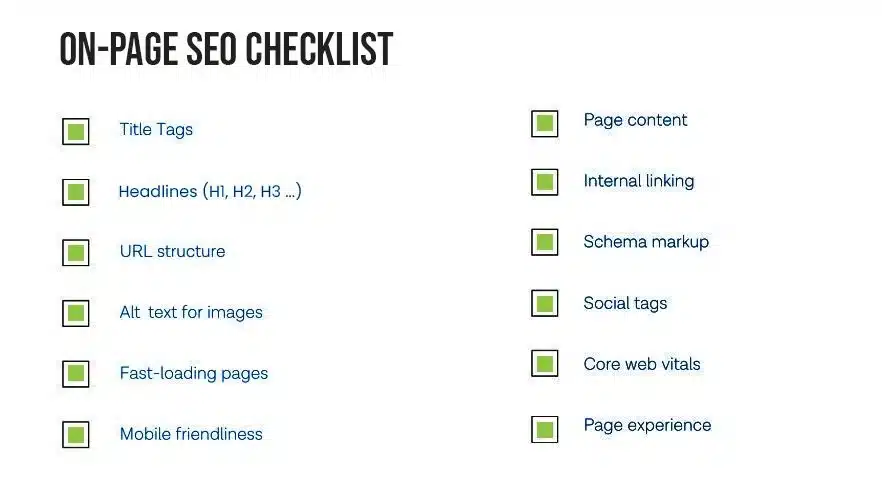
Several on-page SEO factors should be reviewed when optimizing a page.
- Content Relevance
- Content Quality
- Title and Headings
- Keyword Usage
- Internal Links
- Images
- User Experience
On-Page SEO Techniques
Several on-page SEO techniques can improve the effectiveness of your pages including:
- Match Content to Search Intent
- Improve Content Structure
- Strengthen Internal Linking
- Update Outdated Content
- Improve Readability
- Optimize Images
- Improve Page Titles
- Add Relevant Supporting Content
Common On-Page SEO Mistakes
- Keyword Stuffing
- Writing for Search Engines Instead of Users
- Ignoring Search Intent
- Using Generic Anchor Text
- Overlooking Existing Content
- Using Duplicate Titles
Conclusion
The on-page SEO process involves optimizing the content and elements of individual webpages so they can better satisfy users and search engines.
From keyword research and search intent to title tags, headings, content, internal links, images, and URLs, every element contributes to how effectively a page communicates its topic.
The best approach is not to optimize pages around keywords alone. Instead, create useful content, structure it clearly, connect related pages, and continuously improve it based on performance data.
On-page SEO can provide a strong foundation for broader SEO efforts and help your website build sustainable organic search visibility.
Frequently Asked Questions
1. How do I do on-page SEO?
Start with keyword research and search intent, then optimize content, titles, headings, internal links, images, and URLs.
2. What are the most important on-page SEO factors?
Content relevance, search intent, title tags, headings, keyword usage, internal links, and overall user experience are important factors.
3. How often should I update on-page SEO?
Review important pages regularly and update them when information, search intent, rankings, or business priorities change.
4. Does on-page SEO improve rankings?
Yes. Proper on-page SEO can help search engines understand your content and match it with relevant searches, which can support better rankings.