
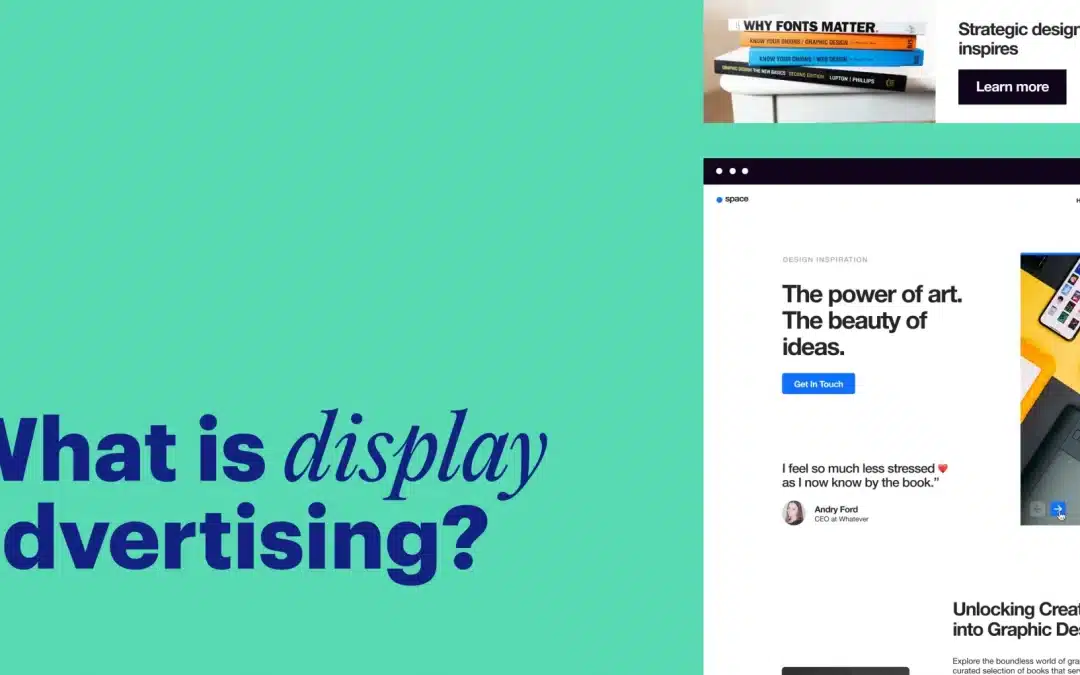
Today consumers spend much of their time online. They browse websites, watch videos, use apps, and engage with digital content instead of searching for products. This creates a major opportunity for businesses to reach potential customers before they are ready to make a purchase. That’s where display advertising allows brands to use visually engaging ads to target their target audience. These ads help in building awareness, getting website visitors, promoting products, and supporting conversions across digital channels.
What Is Display Advertising?

It is a form of digital advertising that uses visual formats such as images, graphics, videos, animations, and interactive elements to promote a business, product, or service. These ads can appear across websites, mobile apps, video platforms, and other digital properties.
In search advertising users see an ad after they search for something. However, in display advertising businesses can reach people even while they are browsing online. This makes it particularly useful for creating awareness and keeping a brand visible throughout the customer journey.
For example, a person reading an article about home renovations might see an advertisement for a furniture company. The user did not necessarily search for that company, but the advertisement reaches them while they are consuming relevant content.
How Does Display Advertising Work?

So, the important question is how does display advertising work in practice? A campaign starts with an advertiser defining a goal, audience, budget, and targeting strategy. The ads are then delivered based on factors such as audience characteristics, interests, browsing behavior, context, location, or previous interactions with the brand.
Google explains that Display campaigns can reach audiences across websites, apps, YouTube, and other Google-owned properties, with targeting options that help advertisers reach relevant users. The basic process looks like this:
- Define the campaign objective
- Identify the target audience
- Create visual ad assets
- Select placements and targeting options
- Set the budget and bidding strategy
- Launch the campaign
- Monitor performance and optimize results
This combination of creative design, audience targeting, bidding, and measurement forms the foundation of modern digital advertising.
Types Of Display Advertisements
Digital display advertisements are paid visual placements designed to get attention of users and encourage them to take action. Its common format includes:
- Banner advertisements
- Responsive image ads
- Video ads
- Animated ads
- Interactive rich-media ads
- Product-focused advertisements
- Retargeting ads
Some campaigns use static creatives, while others use responsive formats that automatically adapt available assets to different placements. For instance, Google supports responsive Display ads that can combine headlines, images, logos, videos, and descriptions into different ad variations.
Where Do Display Ads Appear?
One of the biggest advantages of online display ads is the range of areas where ads can be shown.
Depending on the platform and campaign settings, display ads on website pages can appear alongside articles, within content feeds, or in dedicated advertising spaces. They can also appear inside mobile applications and video environments. Some common placements include:
- News and media websites
- Blogs and industry publications
- Mobile applications
- Video platforms
- E-commerce websites
- Content networks
- Google-owned properties
For example, Google’s Display Network includes websites, mobile apps, and video content where advertisers can reach audiences based on their selected targeting signals.
What Are the Main Types of Display Advertising?
Banner Advertising
Banner ads are among the most recognizable forms of display media advertising. They contain an image, headline, brand message, and call-to-action designed to encourage users to click.
Responsive Display Ads
Responsive ads automatically adjust their appearance to fit different available spaces. This allows advertisers to use multiple creative assets without manually designing every variation.
Video Display Ads
Video can be incorporated into display campaigns to communicate products, services, demonstrations, or brand stories.
Retargeting Ads
Retargeting campaigns show advertisements to people who have previously interacted with a website or a digital platform. This can help businesses reconnect with visitors who left without completing a desired action.
The Interactive Advertising Bureau (IAB) maintains industry standards and guidelines covering different areas of digital advertising, including creative and technical practices.
Why Do Businesses Use Display Advertising?
The role of advertising goes beyond generating immediate clicks. A well-planned campaign can support multiple stages of the marketing funnel.
- Build Brand Awareness
- Reach New Audiences
- Support Remarketing
- Promote Products and Services
- Increase Website Traffic
How Does Display Ad Marketing Target Customers?
Targeting is one of the most important elements of successful display ad marketing. Showing an advertisement to the wrong audience can waste the budget even when the creative itself is excellent. Depending on the advertising platform, marketers may use:
- Demographic targeting
- Geographic targeting
- Interest-based audiences
- Contextual targeting
- Website or placement targeting
- Remarketing audiences
- In-market or intent-based audiences
Google’s Display targeting options can include audiences, demographics, topics, keywords, placements, and people who have previously interacted with a website or app.
The right targeting approach depends on the campaign objective. An awareness campaign may prioritize broad but relevant reach, while a conversion-focused campaign may use more specific audience signals.
What Are Display Advertising Campaigns Designed to Achieve?
Not every campaign should be judged only by clicks. The appropriate objective depends on where the audience is in the buying journey. A campaign might focus on:
- Brand awareness
- Website traffic
- Lead generation
- Product promotion
- Sales
- Remarketing
- Audience engagement
Google recommends defining the campaign goal before determining the audience, budget, bidding approach, creative, and measurement strategy.
This is particularly important for performance display ads, where campaign decisions are closely tied to measurable outcomes such as conversions, cost per acquisition, or return on advertising spend.
Final Words
Display advertising gives businesses a way to reach audiences visually while they browse websites, use apps, watch videos, and interact with digital content. From banner and responsive ads to retargeting and rich media, different formats can support different marketing objectives.
The strongest campaigns combine relevant targeting, compelling creative, clear objectives, accurate measurement, and continuous optimization.
Frequently Asked Questions
1. Is display advertising effective for small businesses?
Yes. Small businesses can use display campaigns to build local awareness, promote specific offers, retarget website visitors, or introduce their products to relevant audiences.
2. What makes a display ad effective?
An effective display ad usually combines a clear value proposition, strong visual hierarchy, recognizable branding, and a specific call-to-action. The creative should also match the audience and landing page it leads to.
3. Should display ads be used for brand awareness or conversions?
It can support both objectives. Awareness campaigns focus on reaching relevant audiences and building familiarity, while conversion-focused campaigns prioritize actions such as purchases, sign-ups, or qualified leads.
4. How much budget should a business allocate to advertising?
There is no universal budget because costs vary according to the audience, industry, competition, platform, targeting strategy, and campaign objective. Businesses should begin with a controlled budget and increase spending when performance data supports scaling.
5. Can display ads work together with SEO?
Yes. Display and SEO can support different parts of the customer journey. SEO can capture organic search demand, while display advertising can build awareness, support remarketing, and keep a brand visible beyond search results.