
As I wondered, businesses may publish blog posts regularly, but if those pages do not match what people are searching for, satisfy search intent, or support business goals, organic growth can remain limited. This is why an effective SEO strategy matters. An SEO content strategy combines content planning, search engine optimization, audience research, and performance measurement to create content that can be discovered by search engines and provides value to readers.
What Is an SEO Content Strategy?
So, what is SEO content strategy, is the most asked question in marketing teams. A content strategy is a structured plan for researching, creating, optimizing, publishing, and maintaining content with the goal of improving organic search visibility. This content also supports business objectives.
A good strategy has four key elements such as: Audience + Search Intent + SEO + Business Goals
For example, an accounting software company should not simply publish articles about “accounting.” Its strategy could target topics around accounting software, invoicing, bookkeeping, financial reporting, tax workflows, and specific customer needs.
This creates connected content topics rather than a collection of unrelated articles.
Why Is an SEO Content Strategy Important?
Search engines need to understand what a page is about and whether it provides useful information for a particular search. A strategic approach helps businesses:
- Target relevant search queries
- Attract qualified organic traffic
- Build topical authority
- Improve content quality
- Reduce content duplication
- Create stronger internal linking
- Support different stages of the buyer journey
- Generate leads and conversions
- Identify content gaps
- Improve existing content
Without a strategy, content production can become inconsistent and disconnected from the website’s overall SEO goals.
How SEO and Content Strategy Work Together?
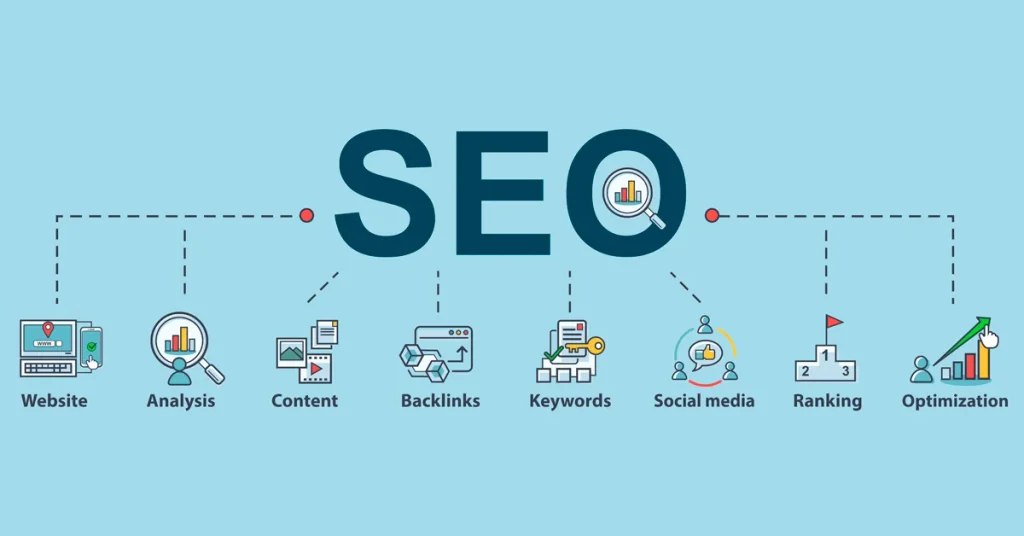
SEO and content strategy are closely connected, but they are not exactly the same thing.
SEO focuses on improving a website’s visibility in search engines, including technical optimization, keywords, site architecture, and authority.
Content strategy includes what information the business should create and how that information should serve its audience and goals.
When they both are combined, they create a complete system, for example:
- SEO research identifies what people search for
- Content strategy determines what should be created to answer those searches
- Content production turns the strategy into useful resources
- Optimization improves discoverability and relevance
- Measurement determines what is working
This is the foundation of an effective content strategy for SEO.
Key Elements of an SEO Content Strategy
1. Define Your Target Audience
Before researching keywords, understand who you are creating content for. For example consider:
- Their problems
- Their goals
- Their level of knowledge
- Questions they ask
- Products or services they need
- Objections they may have
- Where they are in the buying journey
2. Conduct Keyword Research
Keyword research helps identify the phrases and questions people use when searching for information. Keywords should be evaluated based on:
- Search intent
- Relevance
- Competition
- Business value
- Conversion potential
- Topical relationships
3. Understand Search Intent
Search intent explains what the user is trying to accomplish. Some of the common types include:
- Informational
- Navigational
- Commercial
- Transactional
For example, someone searching “what is CRM software” probably wants educational information, while someone searching “best CRM for small business” is much closer to evaluating solutions. Matching content to intent is one of the most important SEO content strategies.
4. Build Topic Clusters
A topic cluster organizes related content around a central subject. For example, if the content pillar is digital marketing the supporting content should cover:
- SEO
- Content marketing
- Social media marketing
- Email marketing
- Paid advertising
- Marketing automation
The pillar page can link to supporting articles, while supporting articles link back to the pillar and relevant related pages.
SEO Content Marketing Strategy
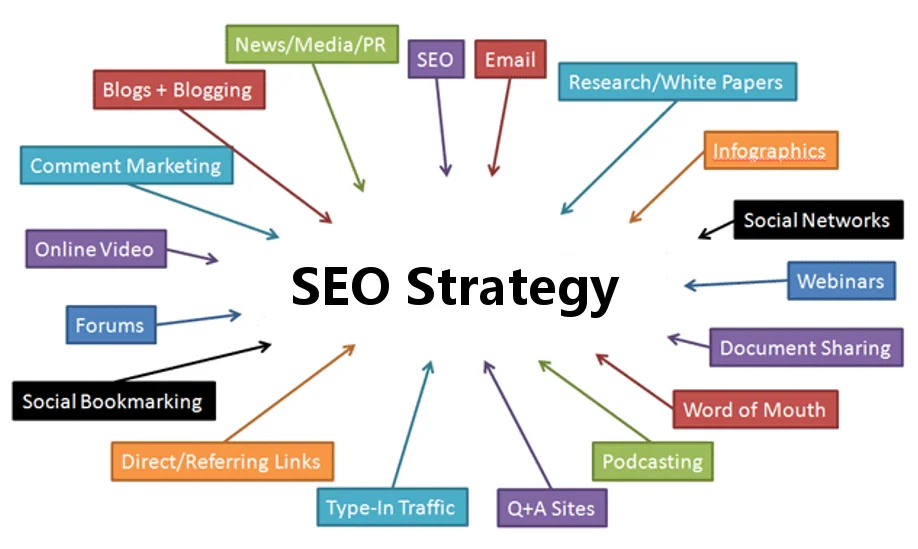
An SEO content marketing strategy should connect organic search with the marketing funnel.
Top of the Funnel
Create educational content that answers common questions and introduces users to the problem.
Middle of the Funnel
Create comparison guides, detailed explainers, case studies, and solution-focused content.
Bottom of the Funnel
Create product pages, service pages, pricing content, alternatives, comparisons, and conversion-focused resources.
This approach ensures that SEO content does more than generate visitors. It helps move relevant users toward becoming customers.
How to Optimize Content for SEO

If you are wondering how to optimize content for SEO, start with:.
Optimizing the Title: Create a clear title that communicates the page’s topic and naturally incorporates the primary keyword where appropriate.
Using Logical Headings: Use H2 and H3 headings to organize information and make the content easy to scan.
Matching Search Intent: The page should answer the questions and needs behind the target search query.
Improving Internal Linking: Link to relevant pages using natural contextual anchor text.
Adding Supporting Information: Use examples, statistics, processes, comparisons, and expert insights where they genuinely improve the content.
Optimizing for Readability: Keep paragraphs short, use lists where appropriate, and avoid unnecessary complex words or jargon.
Optimize Existing Content: Updating older content can improve relevance, accuracy, and search performance.
SEO Content Management
SEO content management is the ongoing process of organizing, monitoring, updating, and improving a website’s content. A content management system should help your team keep track of:
- Published content
- Target keywords
- Content owners
- Publication dates
- Performance
- Update schedules
- Internal links
- Content gaps
Common SEO Content Strategy Mistakes
- Publishing Without Search Intent
- Focusing Only on High-Volume Keywords
- Creating Too Much Similar Content
- Ignoring Existing Content
- Measuring Only Traffic
- Keyword Stuffing
Repeating a keyword unnaturally can reduce readability and does not create better content.
Best Practices for an Effective Content Strategy
To build a sustainable strategy:
- Start with business and audience goals
- Research keywords based on intent and relevance
- Build topic clusters
- Create content that provides genuine value
- Optimize pages naturally for search
- Strengthen internal linking
- Refresh important content regularly
- Measure organic performance
- Consolidate or remove low-value content when appropriate
- Adjust the strategy based on data
SEO is an ongoing process rather than a one-time content campaign.
Final Verdict
An effective strategy for SEO content includes keyword research, search intent, content planning, optimization, internal linking, content management, and performance measurement.
By combining content strategy in SEO with strong content quality and continuous optimization, businesses can build topical authority, get qualified organic traffic, and create a sustainable source of growth.
For best results, research what your audience needs, create genuinely useful resources, optimize them for discovery, measure their performance, and continuously improve what you publish.
Frequently Asked Questions
1. How does an SEO content strategy work?
A strategy for SEO content is a plan for creating, optimizing, and managing content to improve search visibility and attract relevant organic traffic.
2. Why is content strategy based on SEO important?
It helps businesses create content that matches search intent, targets relevant keywords, builds topical authority, and supports long-term organic growth.
3. How often should SEO content be updated?
Important content should be reviewed regularly, especially when information, search trends, or business offerings change. High-value pages may need more frequent updates.
4. How do you measure SEO content performance?
Track organic traffic, keyword rankings, impressions, clicks, engagement, conversions, and leads to understand whether content is achieving its goals.