
B2B buyers are increasingly researching products, services, and vendors online before speaking with a sales representative, comparing solutions, reading content, evaluating competitors, and searching for answers to specific business problems. However, B2B SEO is different from optimizing a general consumer website because B2B purchases often involve multiple decision-makers, longer sales cycles, higher-value contracts, and highly specific search intent. Therefore, a successful B2B SEO strategy needs to do more than generate website traffic by attracting the right businesses, answering their questions at different stages of the buying journey, and establishing credibility. It should also turn organic visitors into leads and customers.
What Is a B2B SEO Strategy?
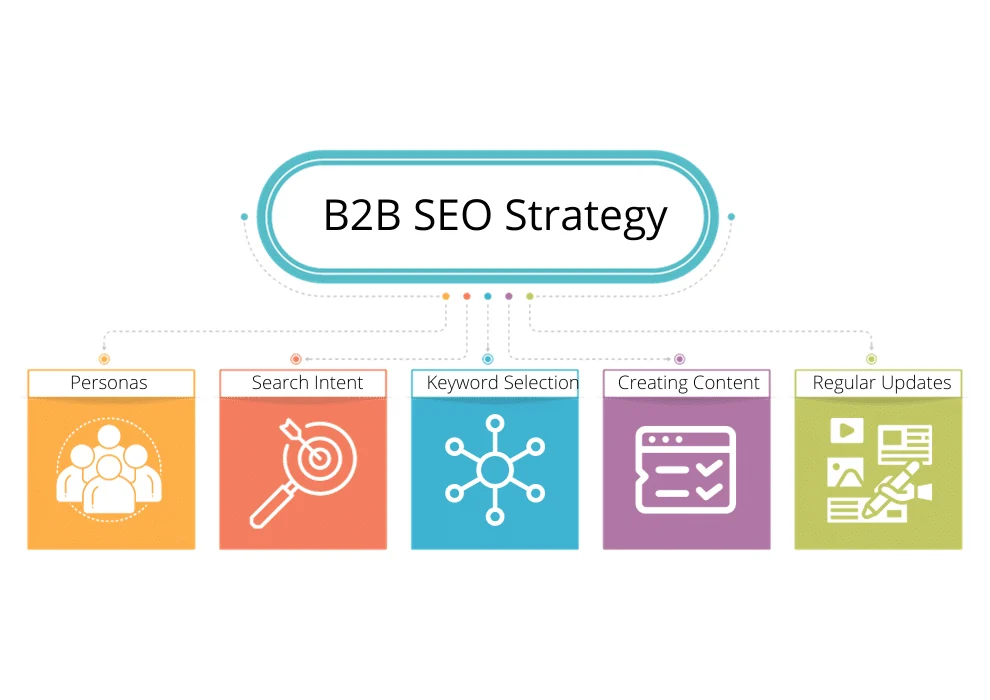
A B2B SEO strategy is a plan for improving a business-to-business website’s visibility in search engines to attract qualified prospects and support revenue growth. It combines:
- Keyword research
- Search-intent analysis
- Technical SEO
- Content marketing
- On-page optimization
- Internal linking
- Digital PR and link building
- Conversion optimization
- Performance measurement
B2B SEO connects search visibility with business outcomes such as qualified leads, demo requests, sales opportunities, and revenue.
Why B2B SEO Matters in 2026
B2B buyers can often complete a significant amount of research before contacting a company. A client may search for:
- Solutions to a business problem
- Software categories
- Product features
- Industry-specific solutions
- Pricing information
- Competitor comparisons
- Product alternatives
- Implementation guides
If your website does not appear during this research process, competitors have an opportunity to capture that demand.
Related Article: Seo Strategy For Saas: A Step-by-Step Guide
A Step-By-Step Approach for B2B SEO Strategy
Step 1: Define Your Ideal B2B Customer
Before conducting keyword research, define who you want to target. Create an ideal customer profile based on factors such as:
- Industry
- Company size
- Location
- Job role
- Business challenges
- Technology requirements
- Purchasing authority
- Budget
- Search behavior
For example, a cybersecurity company targeting enterprise organizations should not build the same SEO strategy as one targeting small businesses.
Step 2: Conduct B2B Keyword Research
Keyword research is one of the foundations of b2b search engine optimization. However, B2B companies should not select keywords based only on monthly search volume. Evaluate each keyword based on:
- Relevance to your offering
- Search intent
- Business value
- Competition
- Buying stage
- Conversion potential
- Customer pain points
Step 3: Map Keywords to the B2B Buyer Journey
A strong SEO strategy for B2B should address multiple stages of the decision-making process including awareness, consideration, and decision.
In awareness the buyer understands a problem but may not know the available solutions. In considerations, the buyer is evaluating the possible solutions. Whereas in decision, the buyer is evaluating vendors. This approach ensures SEO supports both traffic acquisition and conversion.
Step 4: Build a Strong B2B Website Structure
B2B website SEO starts with a clear and logical architecture. Your website should make it easy for users and search engines to understand the relationship between your pages.
A basic structure might look like:
Homepage – Solutions – Industry Pages – Product/Service Pages – Resources – Blog
Also, using contextual internal links to connect related pages is important. For example, a blog article about “inventory forecasting” can link to a relevant inventory management solution page.
Step 5: Create High-Quality B2B Content
Content is one of the most important components of modern B2B SEO. However, publishing hundreds of generic articles is unlikely to create sustainable results.
Focus on SEO for B2B marketing by creating content that shows genuine expertise and solves specific customer problems. Useful formats include:
- In-depth guides
- How-to articles
- Industry reports
- Case studies
- Comparison pages
- Original research
- Expert interviews
- Product explainers
- Use-case pages
- Glossaries
Step 6: Build Topical Authority
Topical authority means demonstrating comprehensive knowledge around subjects relevant to your business. Instead of publishing disconnected articles, build topic clusters.
For example, a B2B CRM company could create a central CRM guide supported by content about:
- CRM implementation
- CRM automation
- CRM integrations
- Sales pipeline management
- CRM reporting
- Lead management
- CRM for different industries
Step 7: Optimize On-Page SEO
Every important page should be optimized for its target topic and user intent. Key elements include:
- Title Tags
- Headings
- Content
- Internal Links
- Images
- Meta Descriptions
These basic B2B SEO tips can improve both search understanding and user experience.
Step 8: Invest in Technical SEO
Technical SEO provides the foundation for search visibility. Some of important areas include:
- Crawlability
- Indexing
- Site architecture
- Mobile usability
- Page performance
- HTTPS
- Canonical URLs
- XML sitemaps
- Redirects
- Broken links
- Duplicate content
Step 9: Build Authority and Trust
Search visibility is not only about optimizing your own website. B2B companies should also develop authority through legitimate external signals. Useful approaches include:
- Digital PR
- Original research
- Industry publications
- Expert contributions
- Relevant partnerships
- Thought leadership
- High-quality backlinks
Step 10: Optimize for Conversions
Generating organic traffic is only one part of B2B SEO. Your website should make it easy for qualified visitors to take the next step. Depending on your business model, calls to action may include:
- Request a demo
- Book a consultation
- Start a free trial
- Download a report
- Contact sales
- Request pricing
B2B SEO Tactics for 2026
Modern B2B SEO tactics should focus on usefulness, authority, and visibility across increasingly complex search experiences.
- Create Original Data
- Build Comparison Content
- Strengthen Expert Content
- Refresh Existing Content
- Target Long-Tail Searches
- Improve Internal Linking
How to Measure B2B SEO Success
A complete strategy should measure business outcomes rather than rankings alone. Some important metrics include:
- Organic Traffic
- Qualified Organic Leads
- Conversion Rate
- Keyword Visibility
- Organic Pipeline
- Revenue
This approach gives B2B SEO marketing a stronger connection to business growth.
When Should You Hire a B2B SEO Consultant?
A B2B SEO consultant can be useful when a company needs strategic SEO expertise but does not want to build a large internal SEO team. A consultant can help with:
- SEO audits
- Strategy development
- Keyword research
- Content planning
- Technical recommendations
- Competitor analysis
- SEO roadmaps
- Performance analysis
Companies with larger execution requirements may instead choose an agency or internal team supported by specialist consultants.
Common B2B SEO Mistakes
- Focusing Only on High-Volume Keywords
- Creating Content Without Commercial Intent
- Ignoring Technical SEO
- Measuring Vanity Metrics
- Publishing Without a Content Architecture
Final Thoughts
A complete B2B SEO strategy for 2026 combines technical optimization, strategic keyword research, high-quality content, topical authority, website architecture, external authority, and conversion optimization.
The goal is not simply to rank higher. It is to become visible when potential customers are researching problems, evaluating solutions, comparing providers, and preparing to make purchasing decisions.
By combining the right B2B SEO solutions with consistent measurement and continuous improvement, B2B companies can turn organic search into a sustainable source of qualified leads and long-term revenue.
Frequently Asked Questions
1. How is B2B SEO different from B2C SEO?
B2B SEO usually involves longer buying periods, multiple decision-makers, more specialized searches, and higher-value conversions. B2C SEO often focuses more directly on individual consumers and immediate purchases.
2. How long does B2B SEO take to show results?
Results vary based on competition, website authority, technical health, content quality, and industry. Meaningful growth typically requires consistent SEO work over several months.
3. What is the best SEO strategy for B2B companies?
The best strategy combines keyword research, valuable content, technical SEO, topical authority, and conversion optimization based on the target audience.
4. Can B2B SEO generate qualified leads?
Yes. By targeting high-intent keywords and creating content for different stages of the buyer journey, B2B SEO can attract relevant prospects and generate qualified leads.