

Social media success rarely comes from posting more content simply for the sake of staying active. The best campaigns usually have a clear idea behind them, understand what their audience wants to share, and make participation easy. Looking at real social media case studies can help businesses understand what actually works. From Spotify turning personal listening data into shareable content to GoPro building a content engine around its customers, successful brands have used very different strategies to generate attention, engagement, and long-term growth.
What Makes a Social Media Campaign Successful?

Before looking at individual examples, it is important to understand what separates a successful campaign from an ordinary social media post.
The best campaigns usually have at least one of these characteristics:
- A clear audience-focused idea
- Content people naturally want to share
- A strong emotional or practical reason to participate
- Consistent brand positioning
- User-generated content or community involvement
- A measurable business or communication objective
- Content designed specifically for the platform
Strong social media strategy case studies are valuable because they show how creative ideas connect with audience behaviour and measurable outcomes.
1. Spotify Wrapped: Turning Personal Data Into Shareable Content

Spotify Wrapped is one of the most recognisable social media success stories of the digital era.
Instead of simply telling users about Spotify’s features, Wrapped gives people a personalized summary of their own listening behaviour. Users can see their top artists, songs, genres, listening patterns, and other personalized insights, presented in a visually engaging format.
Spotify reported that its 2025 Wrapped generated more than 630 million social-media shares globally and engaged more than 300 million users.
Why Spotify Wrapped Works
The campaign succeeds because Spotify makes the customer the content. A generic post saying, “We are Spotify” gives users little reason to share. A personalised result saying, in effect, “This is what your year looked like” is much more relevant to the individual.
The Social Media Lesson
Businesses do not need Spotify’s amount of user data to use this principle. A smaller company could create:
- Annual customer achievement reports
- Personalised usage summaries
- “Your year with us” posts
- Customer milestones
- Industry benchmark reports
- Personalised recommendations
The lesson is to give your audience something about themselves that they will actually want to share. This makes Spotify one of the most useful social media marketing examples for businesses interested in personalisation.
Related Article: What Are The Best Social Media Engagement Tips in 2026?
2. Dove Real Beauty: Building a Long-Term Brand Conversation

Dove’s Real Beauty campaign shows a different approach to social media success. Rather than relying on one viral post, Dove has spent years building a consistent conversation around realistic representations of beauty, confidence, and self-esteem.
One example is Real Beauty Sketches, which asked women to describe themselves to a forensic artist and compared those descriptions with descriptions provided by other people. Dove reports that the video received more than 50 million views within its first 12 days and has since reached almost 180 million views.
The campaign was not built around a product demonstration. Instead, it created an emotional story that encouraged viewers to reconsider how they viewed themselves.
Why Dove’s Strategy Works
Dove did not create one emotional video and immediately moved to an unrelated message. Its campaigns repeatedly reinforce a recognisable brand position. That consistency gives audiences a reason to associate the brand with a particular idea.
The Social Media Lesson
Your social media strategy does not always need a new message every week. Instead, identify a broader brand idea and develop multiple pieces of content around it.
3. ALS Ice Bucket Challenge: Making Participation Extremely Simple
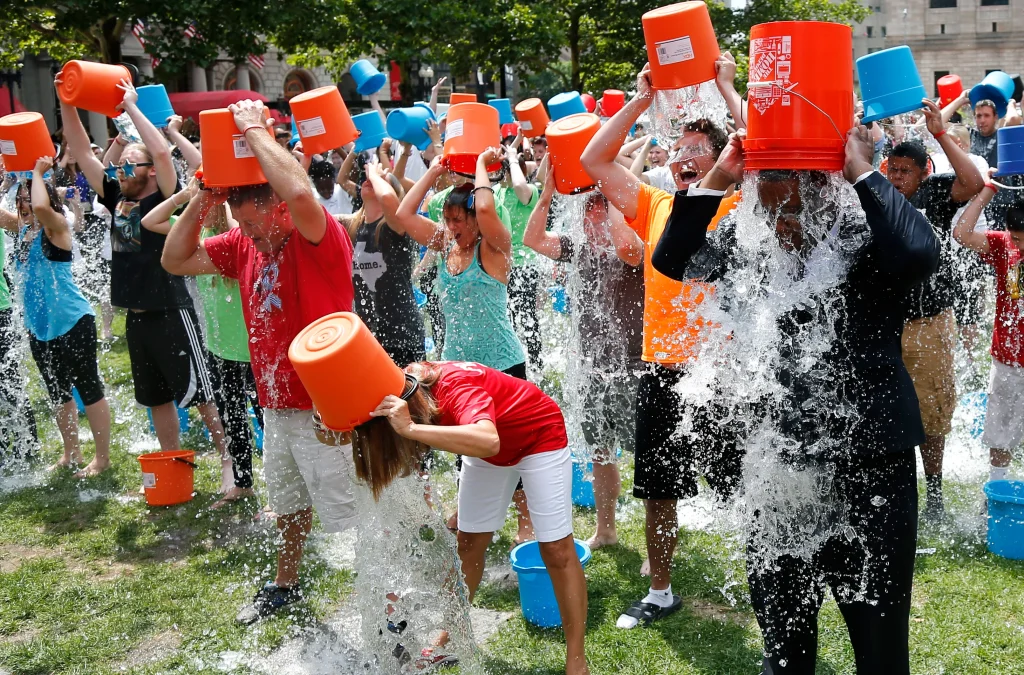
The ALS Ice Bucket Challenge remains one of the examples of how social participation can turn an ordinary idea into a global movement.
The concept was straightforward, that participants filmed themselves pouring ice water over their heads, shared the video, and challenged other people to participate or donate.
According to the ALS Association, more than 17 million people uploaded videos during the 2014 challenge, and the campaign raised $115 million for the organisation.
Why the Campaign Worked
The campaign removed many of the barriers that normally prevent people from participating in online campaigns. People did not need:
- Professional equipment
- Graphic design skills
- A large audience
- A complicated explanation
- A lengthy sign-up process
They could understand the concept almost immediately and create their own version.
The Social Media Lesson
If you want people to participate, make the action obvious. Instead of asking, “Please engage with our latest campaign.” Give people something concrete to do, “Show us your workspace.” “Share your first product using our hashtag.” “Post your biggest business lesson from this year.” “Choose between these two products and tell us why.”
The best social media campaign examples often have a simple participation mechanism that the audience understands without needing a long explanation.
4. GoPro: Turning Customers Into a Content Engine

GoPro provides an excellent example of how user-generated content can become part of a company’s ongoing social media strategy.
Rather than depending entirely on its own production team, GoPro created systems that encourage customers to submit photos and videos captured with its cameras.
GoPro Awards rewards selected creators with exposure, gear, and cash awards. The company says the programme had received nearly one million photo and video submissions from 180 countries by 2020.
The strategy has also produced large-scale community campaigns. For example, GoPro’s Million Dollar Challenge generated 25,000 submissions for a highlight video featuring 66 clips from 56 creators across 22 countries.
Why GoPro’s Strategy Works
GoPro recognised that its customers were already doing interesting things with the product. The company created a mechanism for collecting, rewarding, and redistributing that content. This creates a cycle:
- Customer uses product
- Customer creates content
- Brand features content
- Audience discovers brand
- More customers create content
The Social Media Lesson
Look at what your customers are already doing instead of creating every piece of content from scratch. For example, a restaurant can encourage customers to share their meals. A clothing brand can feature customer styling videos and a SaaS company can showcase customer workflows etc.
5. Nike: Turning Stories and People Into Cultural Content
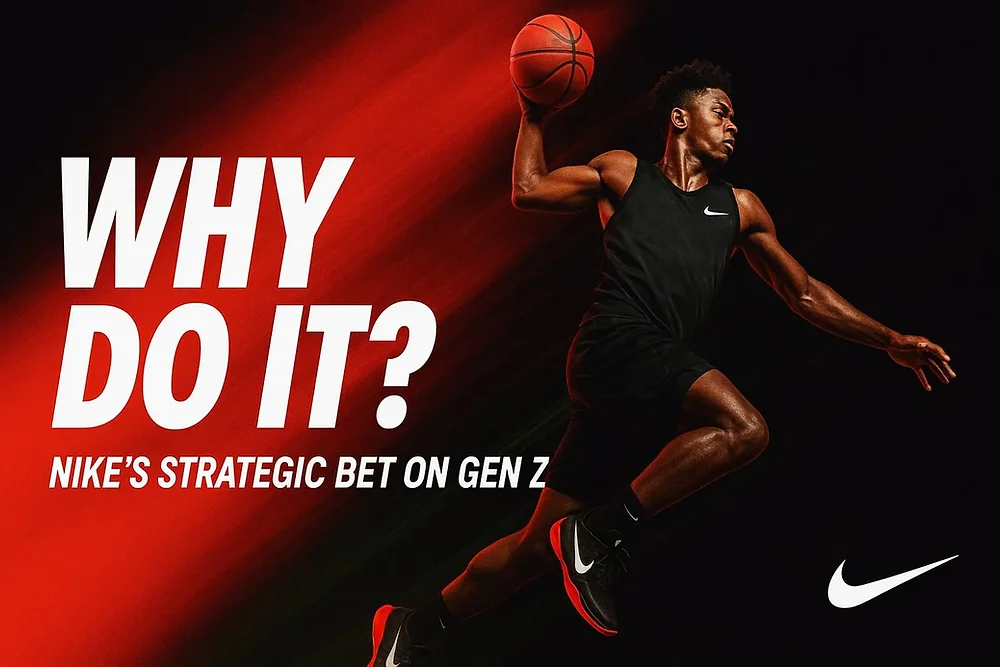
Nike’s social media strategy shows storytelling, athlete partnerships, and content built around human achievement.
Rather than making every post a direct product advertisement, Nike frequently builds content around athletes, challenges, ambition, performance, and cultural moments.
A recent example is Nike’s partnership with Spotify on the Make Moves campaign, which encouraged teenage girls to incorporate movement into their daily routines through music. The campaign combined athletes, artists, creators, playlists, and social content.
Why Nike’s Strategy Works
Nike understands that people often connect with the story behind a product more strongly than the product itself. A running shoe is a product and an athlete training for an impossible goal is a story. That difference matters on social media. Stories create opportunities for audiences to comment, share, follow, and emotionally connect with the brand.
The Social Media Lesson
Businesses must ask what does their product help people achieve? And then build content around that outcome. A productivity software company could focus on entrepreneurs getting more done. A recruitment company could focus on career growth and better hiring etc. Your product should be part of the story, not necessarily the entire story.
What These Social Media Case Studies Have in Common
- They Give People a Reason to Care
- They Understand Audience Behaviour
- They Make Content Easy to Share
- They Build Recognition Over Time
- They Measure More Than Likes
Final Thoughts
The most valuable lesson from these social media marketing case studies is that successful social media is rarely about posting randomly and hoping something takes off.
Each strategy is different, but the underlying principle should be similar to creating something your audience has a reason to care about, participate in, or share.
That is the foundation behind many successful social media campaigns, and it is a principle businesses of almost any size can apply.
FAQs
1. Why are social media case studies important?
They provide practical examples of how different content formats, audience strategies, and campaign ideas work in real-world situations, making it easier to develop informed social media strategies.
2. What makes a successful social media campaign?
Successful campaigns usually have a clear objective, relevant audience insight, strong creative execution, and an easy-to-understand reason for people to engage, share, or participate.
3. Can small businesses use these social media strategies?
Yes. Small businesses can adapt the principles behind these campaigns, such as personalisation, storytelling, user-generated content, and simple participation, without copying the scale or budget of large brands.
4. How can I create a social media case study for my business?
Document the campaign goal, strategy, content used, audience response, key performance metrics, and final results, then explain what the campaign taught you.