
Increasing website traffic is not simply about publishing more content or targeting high-volume keywords. Sustainable growth usually comes from combining technical SEO, search intent, content quality, internal linking, authority building, and consistent optimization.This website traffic case study looks at real examples of businesses that improved organic visibility through different SEO approaches.
So, to know more about website traffic case study, read below.
Case Study 1: Ecommerce Website Increased Organic Traffic by 210%

The Eastwood Project, a Shopify ecommerce store, had approximately 480 ranking keywords and had experienced flat organic traffic for about a year. After 12 months of SEO work, the reported results included:
- 210% increase in organic traffic
- Ranking keywords increased from 480 to 1,460
- 137% increase in organic revenue year over year
The campaign addressed several ecommerce SEO problems, including weak collection-page content, duplicate URLs generated by tag pages, and product descriptions that were not properly aligned with search intent.
The strategy focused on improving the site’s architecture, collection pages, product content, and overall ability to target relevant searches.
The Lesson
Ecommerce businesses should not treat product pages as the only important SEO assets.
Category and collection pages can target broad commercial searches, while product pages can get more specific buying intent. A strong structure allows these pages to work together instead of competing against each other. This is an important part of a scalable SEO growth strategy for ecommerce websites.
Related Article: 5 B2B SaaS SEO Case Studies: Pipeline Growth
Case Study 2: Existing Content Generated 87% Organic Traffic Growth
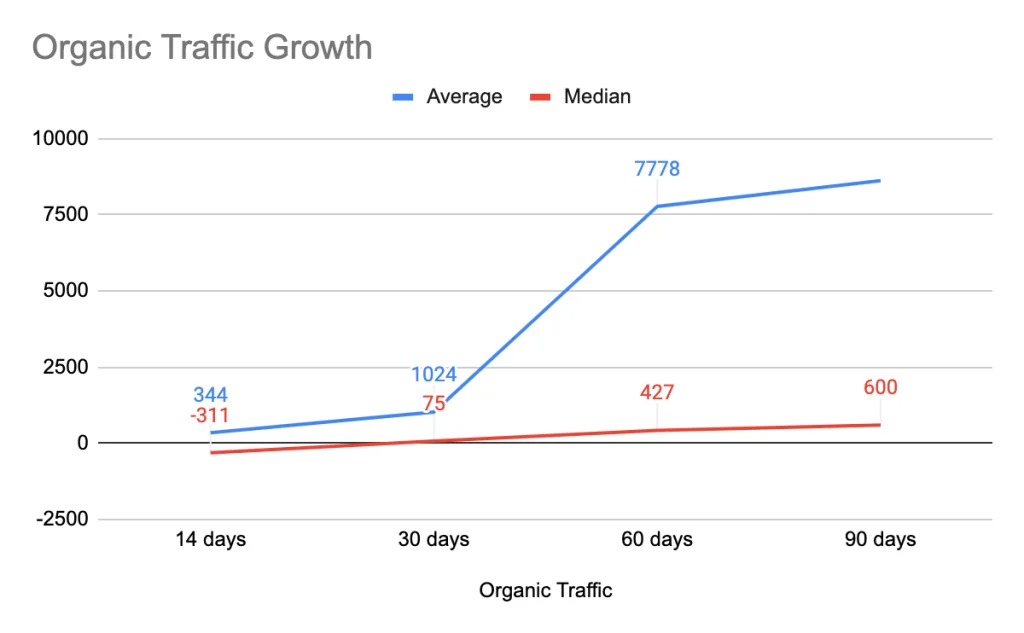
Another organic traffic case study shows what can happen when a website improves its existing content instead of continuously publishing new articles.
CyberNaira reported an 87.23% increase in organic traffic over 90 days without publishing a single new post.
The strategy focused on auditing existing pages, improving keyword targeting, and optimizing content that already had search potential.
Some pages also produced additional affiliate sales after optimization.
The Lesson
A website does not always need hundreds of new articles to achieve Google traffic growth.
Older pages can contain valuable opportunities because they may already have backlinks, rankings, impressions, or historical authority.
A practical content optimization process can identify pages that are close to ranking well and improve them based on current search intent.
Case Study 3: New Website Achieved Over 1,090% Traffic Growth
New websites face a different challenge because they usually start without search history, backlinks, or established authority.
One reported case study followed a new ecommerce website that launched with approximately 20 pages and no search history.
The website grew from around 210 monthly organic visits to more than 2,500 within one year, representing over 1,090% growth.
The same case study reported that the website achieved front-page rankings for its primary target keyword.
The Lesson
Percentage growth can look good when a website starts from a very low baseline. However, the more important lesson is that a new website can build organic visibility by creating a focused foundation instead of trying to rank for everything at once.
A new site should begin with right keyword targets, useful content, technically accessible pages, and a clear topical structure.
What These Website Traffic Case Studies Have in Common
Although these businesses used different approaches, several patterns appear repeatedly.
1. They Started With an SEO Audit
Before implementing an SEO campaign, it is important to understand what is preventing growth. An audit can reveal:
- Indexing problems
- Technical errors
- Weak internal links
- Duplicate content
- Poor page structure
- Keyword cannibalization
- Slow or difficult user experiences
- Missing commercial content
Without this information, businesses may spend resources fixing problems that are not actually limiting their growth.
2. They Focused on Search Intent
Ranking for a keyword is not enough. A page should satisfy the reason someone searched for that keyword.
For example, someone searching for “best accounting software” may be comparing products, while someone searching for “accounting software pricing” has a much stronger commercial intent.
Matching content with intent can help a website get visitors who are more likely to become leads or customers.
3. They Improved Existing Pages
A strong SEO campaign does not always start with new content. Existing pages can often be improved through:
- Better keyword targeting
- Stronger headings
- More complete answers
- Updated information
- Better internal linking
- Improved titles and descriptions
- Clearer conversion paths
This can make existing organic visibility more valuable.
4. They Built Stronger Website Architecture
A clear website structure helps users and search engines understand how pages relate to each other.
Important commercial pages should not be buried under several clicks. Blog content should also connect naturally to relevant service, category, or product pages.
Internal linking can distribute authority across the site while helping visitors find related information.
5. They Measured Business Results
Good SEO reporting goes beyond organic sessions. Businesses should track metrics such as:
- Organic clicks
- Organic sessions
- Impressions
- Keyword rankings
- Qualified leads
- Sign-ups
- Conversion rate
- Organic revenue
- Cost per acquisition
- Pages generating organic traffic
This helps separate genuine SEO results and website traffic case study outcomes from traffic that does not contribute to business growth.
How to Increase Organic Traffic With a Proven Strategy
- Based on these examples, a practical website traffic growth strategy can follow a simple process including:
- Start with a technical and content audit. Identify pages that are already performing and pages with untapped potential.
- Secondly, research keywords according to search intent rather than volume alone. Build content around topics your audience actually searches for.
- Then optimize existing pages and create new content where genuine gaps exist.
- Strengthen internal links between related pages and build relevant authority through useful digital PR, partnerships, citations, or other legitimate link acquisition methods.
- Lastly, monitor performance consistently and update the strategy based on actual data.
Common Mistakes That Limit Website Traffic Growth
We have seen that in website traffic case study, some businesses make SEO more difficult by focusing on the wrong metrics or tactics. Common mistakes include:
- Publishing content without keyword research
- Targeting keywords unrelated to the business
- Ignoring technical SEO
- Creating multiple pages for the same search intent
- Buying low-quality backlinks
- Measuring only total traffic
- Ignoring existing content
- Expecting immediate results
- Failing to update outdated pages
Final Verdict
These website traffic case study examples demonstrate that organic growth can come from very different strategies.
One website achieved significant growth through technical SEO fixes. Another improved ecommerce architecture and content. A SaaS company focused on attracting more qualified traffic, while another website generated growth by optimizing existing content instead of publishing new articles.
These case studies showed that there is not a single factor or tactic behind their improvement. It was having a clear website SEO strategy, measuring meaningful results, and continuously improving based on evidence.
If your goal is to increase website traffic, start by understanding what is limiting your current performance. Fix the technical foundation, align content with search intent, strengthen internal architecture, optimize existing opportunities, and measure the results that actually matter to your business.
FAQs
1. How long does it take to increase website traffic with SEO?
SEO traffic can start improving within a few months, but meaningful growth often requires consistent optimization and several months of effort.
2. Can a new website get organic traffic from Google?
Yes. A new website can build organic traffic by targeting relevant keywords, creating useful content, and establishing search authority over time.
3. What is the best way to measure SEO traffic growth?
Track organic clicks, sessions, rankings, conversions, and qualified leads instead of relying only on total website visits.
4. Does higher organic traffic always mean more sales?
No. Traffic quality matters more than volume, so businesses should target relevant searches that attract potential customers with genuine intent.