

For B2B SaaS companies, SEO is often treated as a traffic-generation channel. But traffic alone does not pay for software, sales teams, or growth targets. The real value comes when organic search attracts the right prospects and moves them toward demos, sign-ups, and revenue. That is why B2B SEO case studies are useful.
They show how different SaaS businesses have used content, technical SEO, keyword targeting, backlinks, product-led content, and conversion optimization to build organic growth. The five examples below highlight different approaches. Some focus on content clusters, others on free tools, technical improvements, regional SEO, or full-funnel optimization.
What Makes B2B SaaS SEO Different?
B2B SaaS SEO is different from simply publishing blog posts around high-volume keywords. A SaaS buyer may search for information several months before becoming a customer. Their journey can include problem-based searches, solution searches, software comparisons, alternatives, pricing queries, reviews, and product-specific searches.
A strong B2B SaaS SEO strategy therefore needs to connect different stages of the buyer journey. For example,
- Problem
- Solution
- Category
- Comparison
- Product
- Demo
This means successful SEO strategies for SaaS companies usually combine informational content with commercial and product-focused pages. The following SaaS SEO case studies show how this can work in practice.
Related Article: What It Is SaaS SEO Agency and How It Works?
1. VEED Case Study Based On Tools, Content, and Backlinks
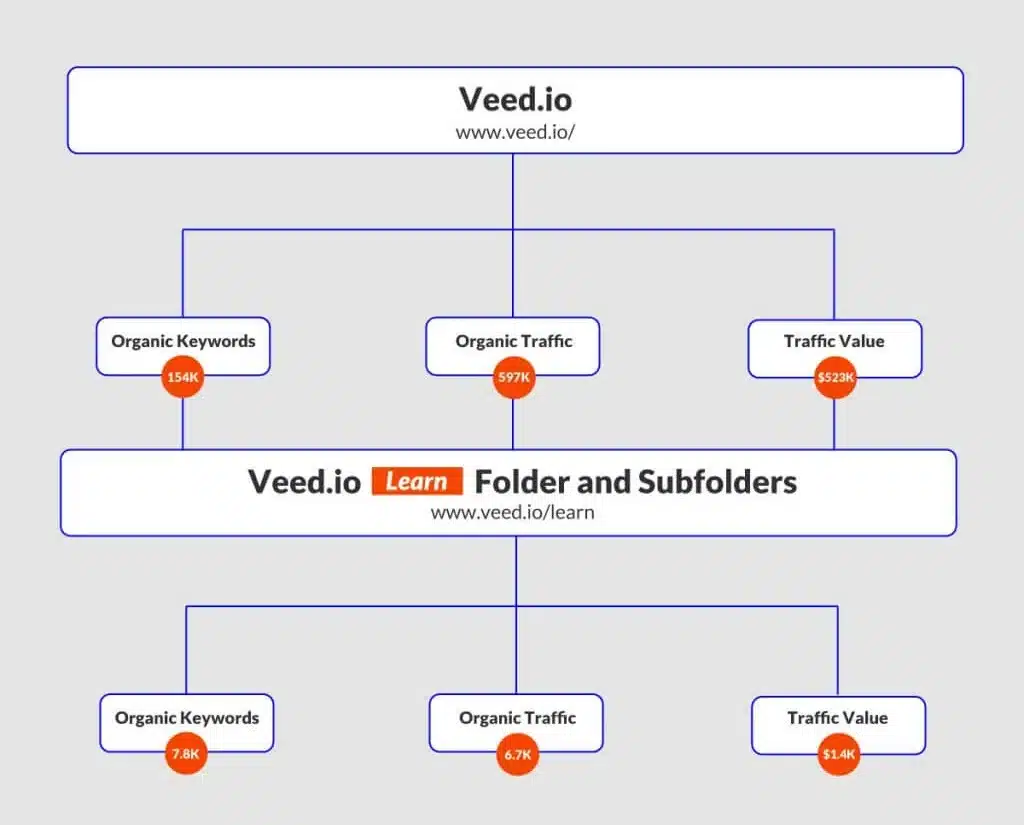
VEED is an online video editing platform and one of the better-known examples of product-led SaaS SEO.
According to an Ahrefs case study, VEED grew to around 100,000 monthly organic visits within its first year of focused SEO growth. Its website used two major organic acquisition engines: free tools and content.
The free tools were particularly important. Rather than relying only on traditional blog posts, VEED created tools that solved specific problems users were actively searching for.
Its blog also became a major source of organic traffic. Ahrefs reported that VEED’s blog had reached around 178,000 monthly organic visits at the time of its case study.
What Was the Strategy?
The approach included:
- Free tools targeting specific search demand
- SEO-focused blog content
- Backlink acquisition
- Content designed around user problems
- Product-led organic growth
This is an important lesson for SaaS companies because not every SEO page needs to be a blog article. A calculator, generator, checker, template, or other free tool can sometimes capture search demand more effectively than an informational article.
2. Storylane Case Study Based on Product-Led Content
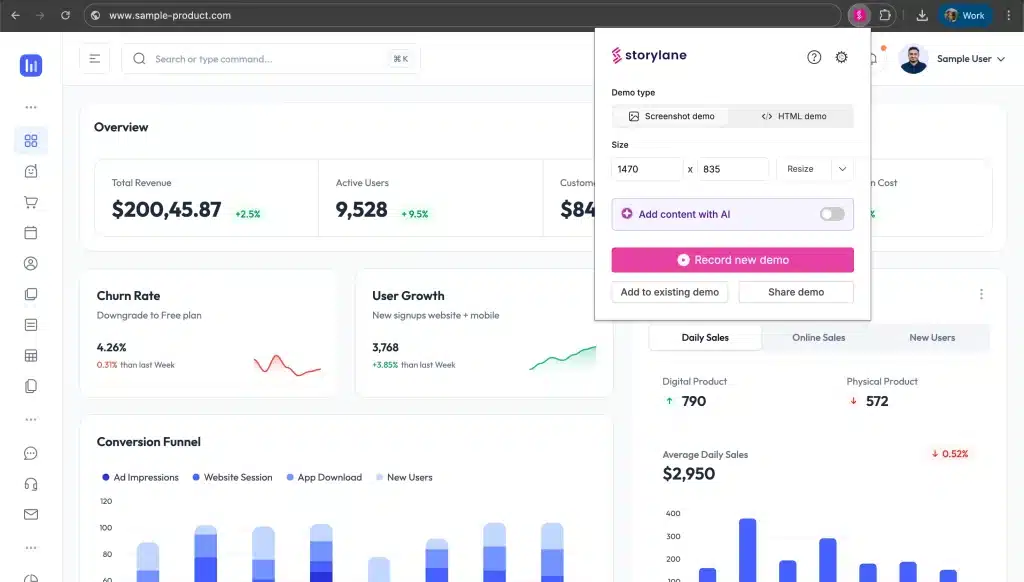
Storylane provides interactive product demos for SaaS companies. Its SEO growth provides another useful example of product-led content.
According to Ahrefs, Storylane changed its content approach by moving beyond standard blog posts and creating interactive product demonstrations and product-led content. The result was reported as 10x organic traffic growth within six months.
What Was the Strategy?
Instead of treating content as something separate from the product, Storylane incorporated the product experience into its content.
This approach can be especially an effective B2B SEO case studies for SaaS companies because potential customers often want to understand how a software solution actually works. Product-led content can include:
- Interactive demos
- Product walkthroughs
- Templates
- How-to resources
- Use-case pages
- Feature explanations
- Workflow examples
3. Medicai Case Study Based On Free Tools to Generate Leads

Medicai is a healthcare technology startup offering cloud infrastructure for medical imaging.
Its SEO case study published by Ahrefs shows how a SaaS company used a combination of programmatic SEO, content, and free tools to compete in a specialized market.
The company researched keywords based on different search intents, including commercial terms such as medical imaging data storage and free-tool searches such as online CT and X-ray viewers.
The free tools became particularly valuable. According to Ahrefs, 20% of Medicai’s leads came from its free tools at the time of the case study.
What Was the Strategy?
Medicai focused on:
- Commercial-intent keywords
- Low-difficulty opportunities
- Free online tools
- Programmatic content
- Competitor research
- Search-intent mapping
- On-page optimization
Instead of trying to compete immediately for extremely broad healthcare technology terms, the company identified more specific opportunities where its product and tools could satisfy search intent.
4. Amberscript Case Study Based On Regional SEO And Backlinks

Amberscript provides transcription and subtitling solutions and offers an interesting lesson for SaaS companies targeting multiple markets.
According to Semrush’s case study, the company discovered that many of its referring domains were coming from countries outside its key target markets.
Therefore, the team shifted toward a more regionally focused linking strategy. It also worked on relevant content and search visibility for the DACH region.
The case study reports that Amberscript surpassed its target of 120% year-over-year organic traffic and lead growth within six months, while user growth in the DACH market reached 140% year over year.
What Was the Strategy?
The approach included:
- Regional keyword targeting
- Geographic backlink analysis
- Relevant link acquisition
- Localized SEO
- Content optimization
- Search visibility monitoring
This matters for an Enterprise’s SaaS SEO strategy. A website can have thousands of backlinks and still have a weak link profile for a particular market if those links provide little geographic or topical relevance.
5. Stampli Based On Connecting Content With Pipeline

Stampli is an accounts-payable automation platform and provides a useful example of SEO being connected with long-term pipeline development.
According to Optimist’s published case study, its engagement with Stampli produced a 5x increase in monthly inbound pipeline and a 20x increase in organic traffic value over a seven-year period.
The strategy evolved alongside Stampli’s business and market. They focused on building content across the buyer journey, including top-of-funnel, middle-of-funnel, and bottom-of-funnel content for the accounts-payable market.
What Was the Strategy?
The approach included:
- Buyer-journey content
- TOFU, MOFU, and BOFU pages
- Industry-focused content
- Commercial search targeting
- Ongoing content development
- Alignment with changing go-to-market priorities
What These B2B SEO Case Studies Have in Common
- They Focused on Search Intent
- Content Was Connected to the Product
- Commercial Intent Matters
- SEO Requires More Than Content
- Pipeline Should Be the End Goal
How to Build a B2B SaaS SEO Strategy
Based on the patterns across these B2B SEO case studies, a practical strategy can follow these steps.
- Define Your ICP
- Map Search Intent
- Build Topic Clusters
- Strengthen Product Pages
- Create Product-Led Assets
- Build Authority
- Optimize Conversions
- Measure Pipeline
Final Thoughts
These five examples show that there is no single formula for SaaS SEO. VEED demonstrates the potential of free tools and content. The common lesson is clear such as successful SaaS SEO connects search intent with the product and the buyer journey.
For B2B SaaS companies, the strongest SaaS growth marketing strategies do not treat SEO as a traffic project. They treat it as a customer acquisition channel.
When keyword research, technical SEO, content, authority building, product pages, and conversion optimization work together, organic search can become a scalable source of qualified demand.
FAQs
1. How long does B2B SaaS SEO take to show results?
Initial improvements may appear within a few months, but meaningful organic growth and pipeline impact often require consistent long-term SEO work.
2. Is SEO effective for SaaS startups?
Yes. SaaS startups can use targeted, lower-competition keywords and useful content to attract relevant prospects without relying entirely on paid advertising.
3. What SEO metrics should SaaS companies track?
Track qualified organic traffic, conversions, leads, demo requests, pipeline, and revenue—not just keyword rankings or website visits.
4. Should SaaS companies focus on high-volume keywords?
Not always. Lower-volume keywords with strong buyer intent can generate more valuable leads than broad keywords with large but less relevant audiences.