
Running performance marketing without the right tools can quickly become a numbers game with no clear answers. Marketers may know how many clicks a campaign generated but still struggle to determine which channel produced revenue, which audience converted, or where advertising budgets are being wasted. Therefore, the right performance marketing tools turn fragmented campaign data into insights, helping businesses measure results and make better decisions.
What Are Performance Marketing Tools?
Performance marketing tools are software platforms that help marketers plan, manage, track, analyze, and optimize campaigns based on outcomes.
Unlike tools focused mainly on content creation or social media scheduling, these platforms are built around performance indicators such as:
- Leads
- Conversions
- Customer acquisition cost
- Return on ad spend
- Revenue
- Click-through rates
- Conversion rates
- Customer lifetime value
The right tool depends on the problem a business needs to solve. An e-commerce company may prioritize attribution and revenue tracking, while a B2B company may need CRM integration and lead-quality reporting.
For example, Google Analytics provides advertising and attribution reports that can help marketers understand how different channels and campaigns contribute to customer actions.
How Do Performance Marketing Tools Help Businesses?
An effective performance marketing approach requires more than launching advertisements. Marketers need a reliable way to connect spending with outcomes. The performance software can help teams:
- Track campaign activity
- Measure conversions
- Compare marketing channels
- Identify high-performing audiences
- Monitor advertising costs
- Analyze customer journeys
- Automate reporting
- Optimize campaigns based on data
For businesses running campaigns across multiple channels, this becomes particularly important because different platforms may report performance differently.
Top 10 Performance Marketing Tools
1. Google Analytics 4
Google Analytics 4 is one of the most widely used analytics platforms for understanding what visitors do after interacting with marketing campaigns.
It can help businesses monitor website and app activity, identify important events, analyze acquisition sources, and evaluate customer journeys.
2. Google Ads
Google Ads is one of the most important performance marketing platforms for businesses looking to capture existing search demand or reach audiences across Google’s advertising system.
Marketers can create campaigns on objectives such as sales, leads, and website traffic while controlling budgets, targeting, bidding, and more.
3. Meta Ads Manager

Meta Ads Manager allows businesses to create and manage advertising campaigns across Meta’s ecosystem. It is particularly useful for businesses that rely on visual advertising, e-commerce campaigns, lead generation, and remarketing.
The platform provides campaign-level data that marketers can use to evaluate spending, reach, engagement, conversions, and other performance indicators.
4. HubSpot
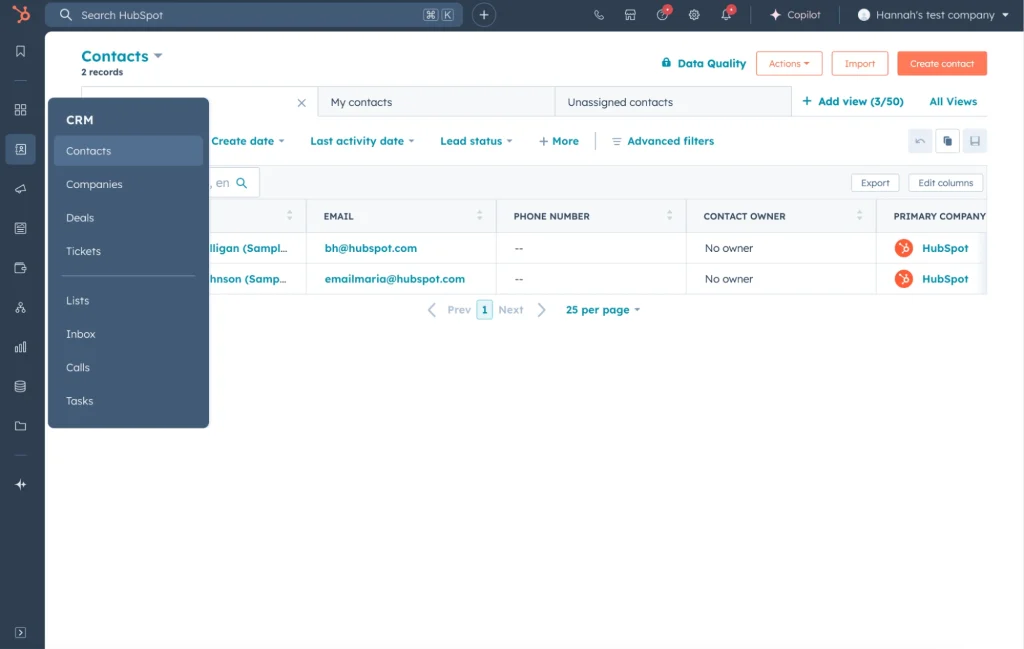
For B2B companies, HubSpot can be especially valuable because generating a lead is only one part of the performance equation. Businesses also need to know whether those leads become qualified opportunities and customers.
Connecting campaign activity with CRM data can help marketers evaluate performance beyond surface-level metrics such as clicks and impressions.
5. Semrush
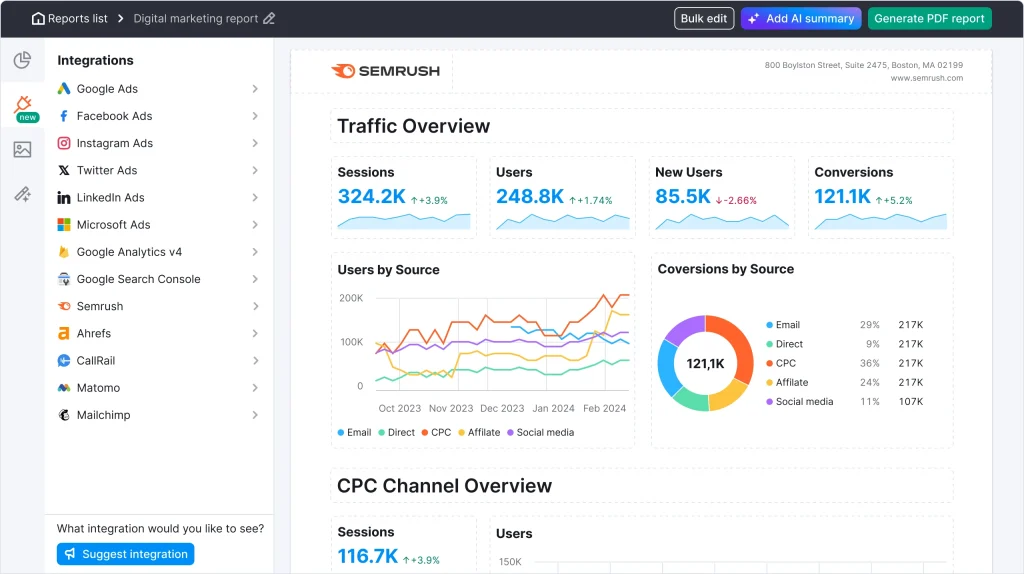
Semrush is useful when performance marketing includes organic search alongside paid acquisition. Its tools cover areas such as keyword research, competitor analysis, SEO auditing, content research, and advertising intelligence.
This makes it useful for marketers who want to understand what competitors are targeting and where opportunities exist across paid and organic search.
6. Ahrefs
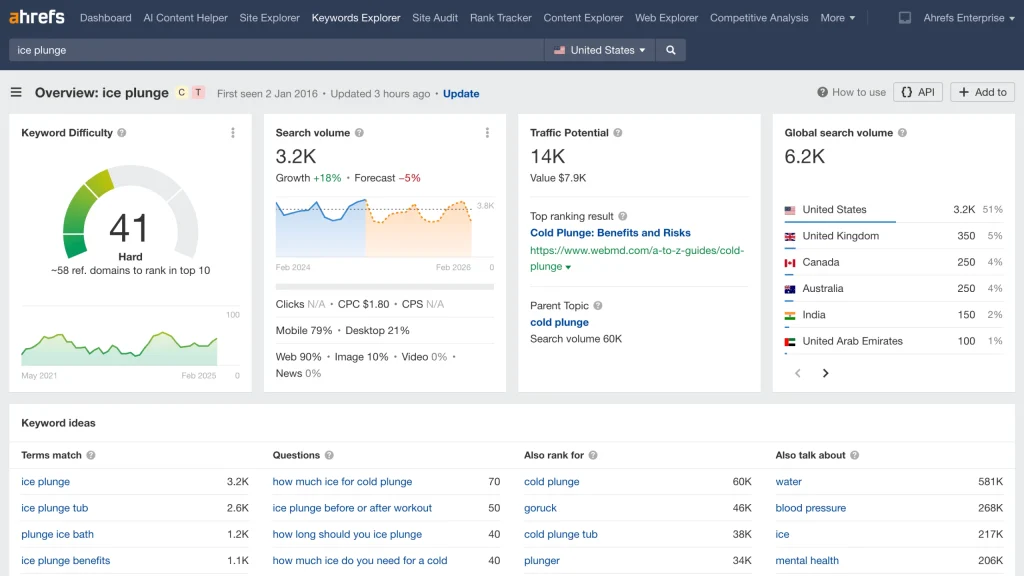
Ahrefs is another valuable platform for marketers who want to understand organic search performance. It provides capabilities around keywords, backlinks, competitors, content, and website SEO.
Although it is not a dedicated paid advertising management platform, it can complement paid campaigns by identifying topics and search opportunities that may generate long-term organic traffic.
7. Supermetrics
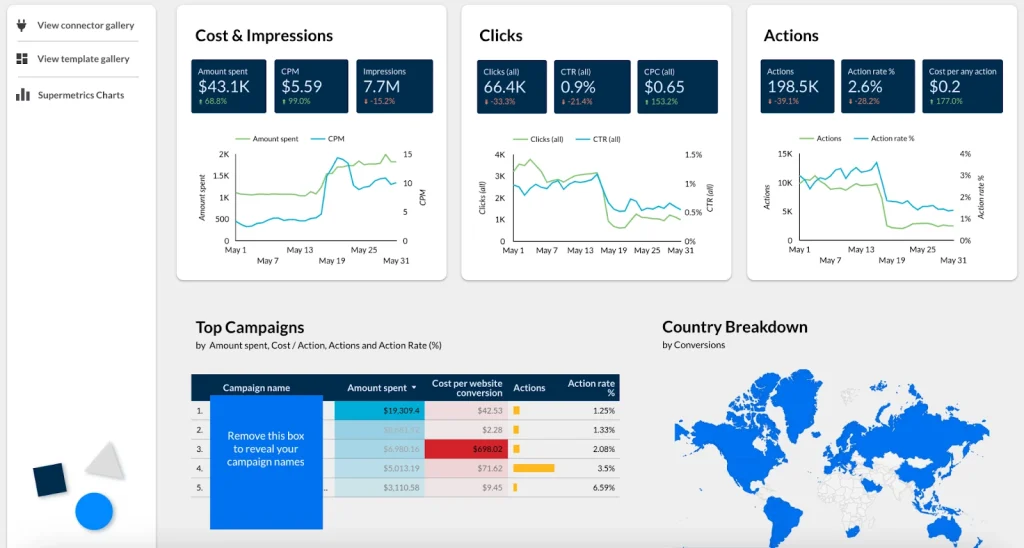
Supermetrics helps marketers bring data from different marketing platforms into reporting and analytics environments. This can reduce manual spreadsheet work and make recurring performance reporting more efficient.
For agencies managing multiple clients or businesses running campaigns across several channels, centralized reporting can make it easier to compare performance.
8. Microsoft Clarity
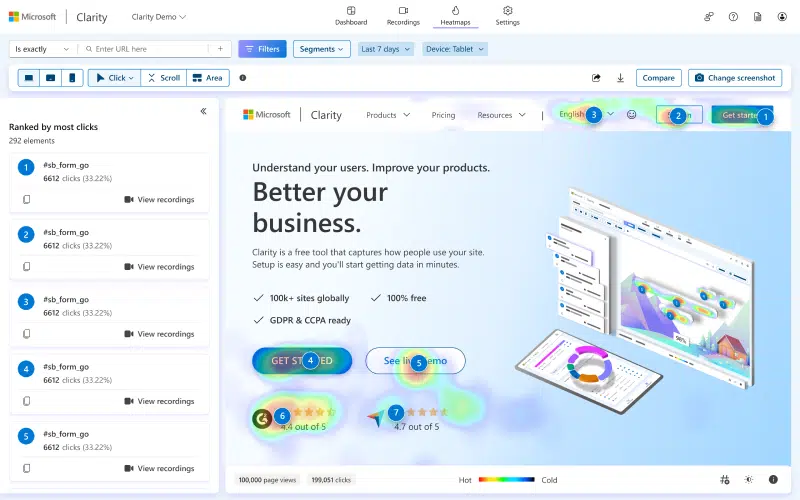
Microsoft Clarity provides behavioral insights that can help marketers understand how visitors interact with websites through tools such as session recordings and heatmaps. This information can be valuable when optimizing landing pages and improving conversion rates.
9. Hotjar
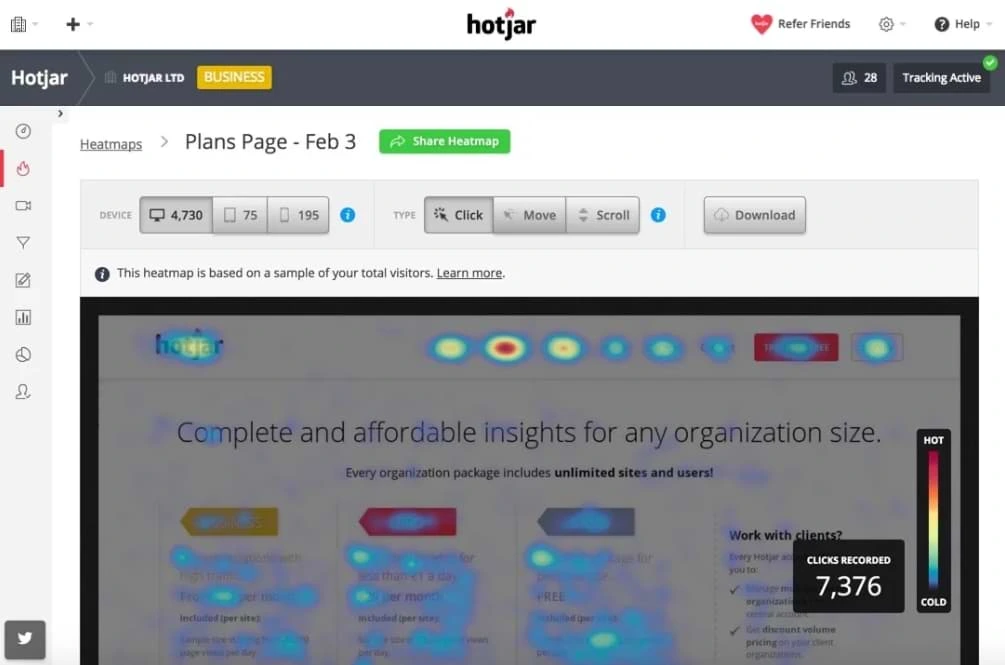
Hotjar focuses on understanding how people interact with websites and digital products. Its analytics capabilities can help marketers identify challenging points in the customer journey and discover where visitors may be struggling.
For performance teams, these insights can complement advertising data. Instead of simply increasing traffic, marketers can investigate whether the landing experience is preventing that traffic from converting.
10. Looker Studio
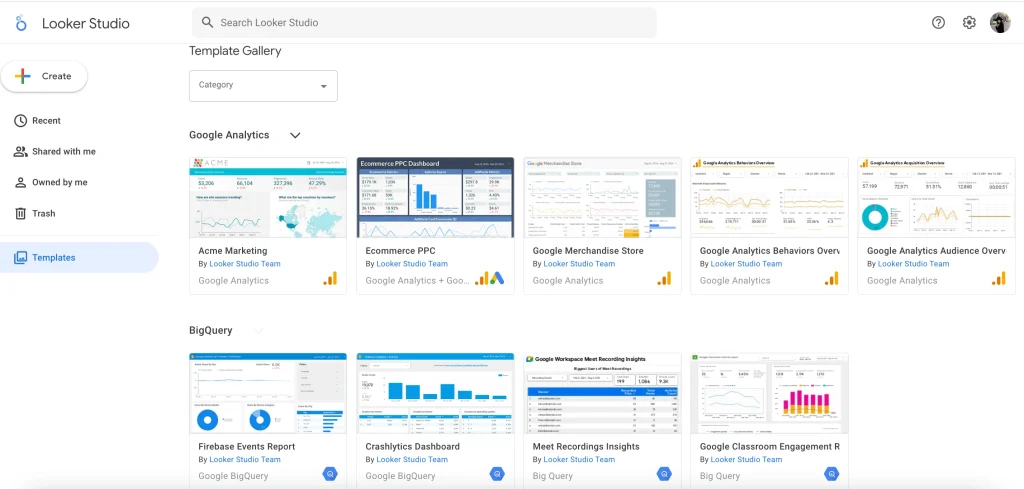
Looker Studio is particularly useful for agencies and internal marketing teams that need to present campaign results to stakeholders in a clear, visual format.
Instead of sending separate reports from every advertising platform, teams can create centralized dashboards showing selected metrics and trends.
How to Choose the Right Performance Marketing Tool
Choosing between different digital marketing tools and platforms should start with your business objective rather than the number of features a software provider offers. So, before choosing a tool ask these questions:
What Do You Need to Measure?
If your priority is website behavior, an analytics platform may be enough. If you need revenue attribution across multiple channels, you may need more advanced performance marketing tracking software.
How Many Channels Do You Manage?
A company running only Google Ads may not need a complex reporting detail. An organization managing Google, Meta, LinkedIn, email, SEO, and affiliate campaigns may benefit from centralized reporting and attribution.
Do You Need CRM Integration?
Lead-generation businesses should consider whether marketing data can be connected with sales outcomes. A large number of leads means little if the leads do not become qualified opportunities or customers.
How Much Reporting Is Required?
If marketers spend hours manually compiling spreadsheets every week, reporting automation may deliver more value than another campaign-management feature.
Do You Need Multiple Marketing and Advertising Software Tools?
In most cases, yes. Trying to find one marketing and advertising software solution that does everything creates complexity. Therefore, different platforms are often designed to solve different problems. A marketing stack might include:
- Analytics for website measurement
- Advertising platforms for campaign management
- CRM software for lead and customer data
- SEO software for organic acquisition
- Behavioral analytics for conversion optimization
- Reporting software for dashboards
The objective is not to collect the largest possible number of tools. It is to create a system where each tool contributes useful information to the decision-making process.
Final Thoughts
The best performance marketing tools are not necessarily the platforms with the longest feature lists. They are the ones that help your team understand what is working, what is not, and where the next marketing dollar should go.
The right combination of marketing tools depends on your channels, business model, budget, and reporting requirements.
If you want to build a performance-driven digital strategy without wasting budget across disconnected channels, we at Johnny’s Digital can help you select the right tools, establish measurable campaigns, and turn marketing data into growth.
Frequently Asked Questions
1. How many performance marketing tools does a business actually need?
There is no ideal number. A small business may only need analytics, advertising platforms, and basic reporting, while a larger organization may require CRM, attribution, SEO, behavioral analytics, and data-aggregation tools. The goal should be to cover essential measurement needs without making the process complex.
2. What is the difference between a marketing platform and a performance tracking tool?
A marketing platform may help you create and manage campaigns, while a tracking tool focuses on measuring what happens after people interact with those campaigns. Some modern platforms combine both functions, but their strengths can differ.
3. Can performance marketing tools track offline conversions?
Some tools can track conversions, particularly when they integrate with CRM systems or advertising platforms that support offline conversion imports. This can help businesses connect online campaign interactions with sales or other actions that happen outside the website.
4. How often should performance marketing data be reviewed?
Campaign data should be monitored regularly, but optimization should depend on the campaign’s volume, objective, and conversion cycle. Checking numbers too frequently can lead to premature decisions, particularly when a campaign has not generated enough data to establish a pattern.