
As we wondered, we can build a web of external links from different sites to help content. They connect one website to another and help users access additional information, sources, tools, or references.
For SEO professionals, understanding external linking is important because not every external link has the same purpose or SEO value. Some links improve user experience and support credibility, while others can introduce unnecessary risks.
What Are External Links?

These links are hyperlinks that point from one website to a different website or domain. For example, if Website A links to Website B, the link is an external link for Website A. An external link can point to:
- Research studies
- Government websites
- Industry resources
- Statistics
- News sources
- Product websites
- Tools
- Partner websites
- Relevant educational resources
These links are different from internal links. Internal links connect pages on the same website, while external site links connect to another domain.
Related Article: Internal Linking for SEO: A Comprehensive Guide
What Is External Linking?
What is external linking? It is the practice of adding links from your website to relevant pages on other websites. For example, an SEO article about website security might link to an official cybersecurity organization for a technical definition or recommendation.
The purpose should be to provide additional value to the reader. External linking should not be treated only as an SEO tactic. A useful external link can help readers verify information, explore a topic further, or access a resource that your website does not provide.
External Links vs. Backlinks
One of the most common SEO misunderstandings is treating links coming from external sites and backlinks as the same thing. They are related, but they describe different directions.
| Link Type | Meaning |
| Internal Link | Links to another page on the same website |
| External link | Links from your website to another website |
| Backlink | A link from another website to your website |
So, if your website links to another domain, that is an external link for your website. If another website links to your website, that is a backlink for your website. This distinction is important when developing an external link strategy.
Why Are Links From External Sites Important for SEO?
These links can support SEO indirectly by improving the usefulness, credibility, and context of a page. Search engines evaluate many signals when determining search results. links coming from external sites are only one part of a broader SEO strategy. The quality and relevance of a link matter more than simply increasing the number of links on a page.
Do External Site Links Help SEO?
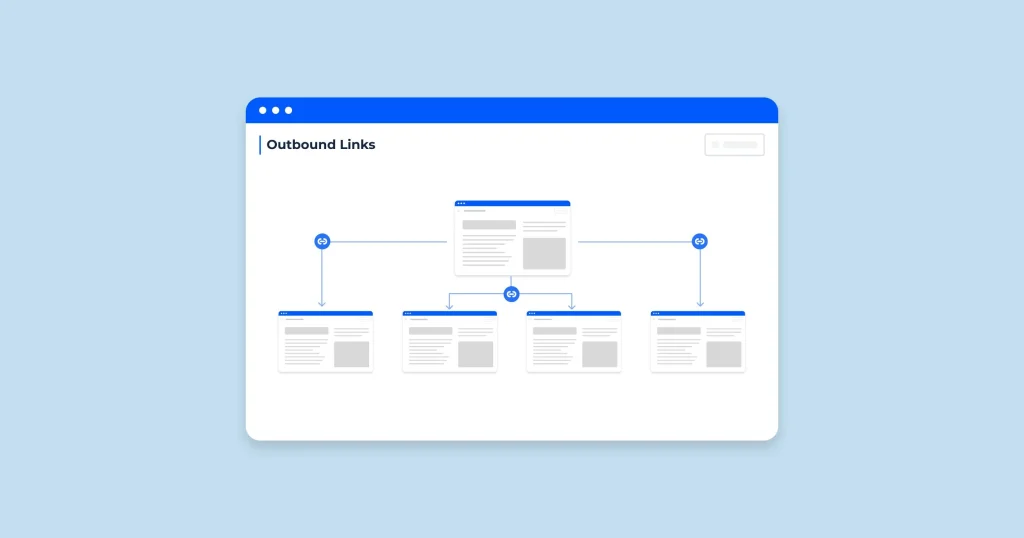
A common question among SEO professionals is what do links coming from external sites help SEO? Yes, they can help indirectly when they improve the quality and usefulness of content.
For example, an article containing statistics may link to the original research source. This makes it easier for readers to verify the information. Similarly, an article explaining a technical concept may link to an authoritative organization for further reading.
The goal is not to add links because they might provide a ranking benefit. The goal is to make the content more useful and trustworthy.
External SEO Links: What Makes a Good Link?
Good links SEO practices focus on relevance, usefulness, and trust. A strong external link should generally:
- Lead to a relevant page
- Add useful information
- Come from a trustworthy source
- Be contextually appropriate
- Use descriptive anchor text
- Work correctly
- Be helpful to the reader
For example, if an article discusses search engine guidelines, linking to an official search engine documentation page is generally more useful than linking to an unrelated marketing website.
Types of Links From External Sites
Editorial Links
These are links included naturally within content because they provide additional information. For example, an article about ecommerce statistics may link to the original research report.
Reference Links
These support factual claims, research, statistics, or definitions. They are particularly useful in data-heavy or research-based content.
Resource Links
Resource links for the direct users including useful tools, guides, calculators, databases, or other resources.
Commercial Links
These can point to products, services, vendors, or commercial partners. Commercial links should be used naturally and transparently rather than added solely to manipulate rankings.
What Are Outside Links?
Outside links is another common term used to describe links coming from external sites. The meaning is essentially the same: the link takes users from your website to a different website. SEO professionals may also use terms such as:
- External hyperlinks
- Outbound links
- Outside links
- External references
The terminology can vary, but the basic concept remains the same.
External Linking Best Practices
- Link to Relevant Sources
- Prioritize Trustworthy Websites
- Use Natural Anchor Text
- Avoid Excessive Linking
- Check Links Regularly
Broken links from external sites can create a poor user experience. SEO teams should find outbound links and check important pages for broken or redirected URLs.
Should Links From External Sites Open in a New Tab?
There is no universal SEO requirement that these links must open in a new browser tab. The decision should be based on usability and the website’s overall experience.
If these links open in a new tab, make sure the behavior is consistent and understandable to users. SEO should not be the primary reason for changing this setting.
No-follow and Other Link Attributes
SEO professionals should also understand link attributes. The no-follow attribute tells search engines that the website does not want to associate the link in the usual way. Other attributes include:
- rel=”sponsored” for paid or sponsored links
- rel=”ugc” for user-generated content
These attributes help search engines understand the nature of certain links. The correct attribute depends on why the link exists.
What Are External Backlinks?
The term external backlinks can sometimes cause confusion. A backlink is a link pointing from another website to your website. From your perspective, that link is an external link coming into your site. For example:
There are two websites A and B. For Website A, it is an external or outbound link. For Website B, it is a backlink.
External Link Building vs. Backlink Building
External link building can refer to efforts to obtain links from external websites, although SEO professionals more commonly call this link building or backlink building.
The distinction matters because linking outward from your website and earning links from other websites are two different activities. An effective SEO strategy can include both:
External linking: Linking from your website to useful external resources.
Backlink building: Earning links from other relevant websites to your website.
Final Thoughts
Links from external sites are a basic but important part of professional SEO. They help websites connect users with useful resources, support factual claims, provide additional context, and create a better overall content experience. The good approach is not to add as many links as possible. Instead, focus on relevant sources, trustworthy websites, descriptive anchor text, appropriate link attributes, and regular link maintenance.
FAQs
1. Can links from external websites improve website credibility?
Yes. Linking to recognized and authoritative sources can support the credibility of your content, especially for research-heavy or expert topics.
2. How many external links should a webpage have?
There is no fixed number. Add only the links that genuinely help users understand, verify, or explore the information on the page.
3. Can external links improve user experience?
Yes. Relevant links can help visitors access useful information, official resources, tools, or supporting evidence without searching for them separately.
4. Should local businesses use external site links on their websites?
Yes. Local businesses can link to relevant government, industry, community, or professional resources that provide useful information to local customers.