
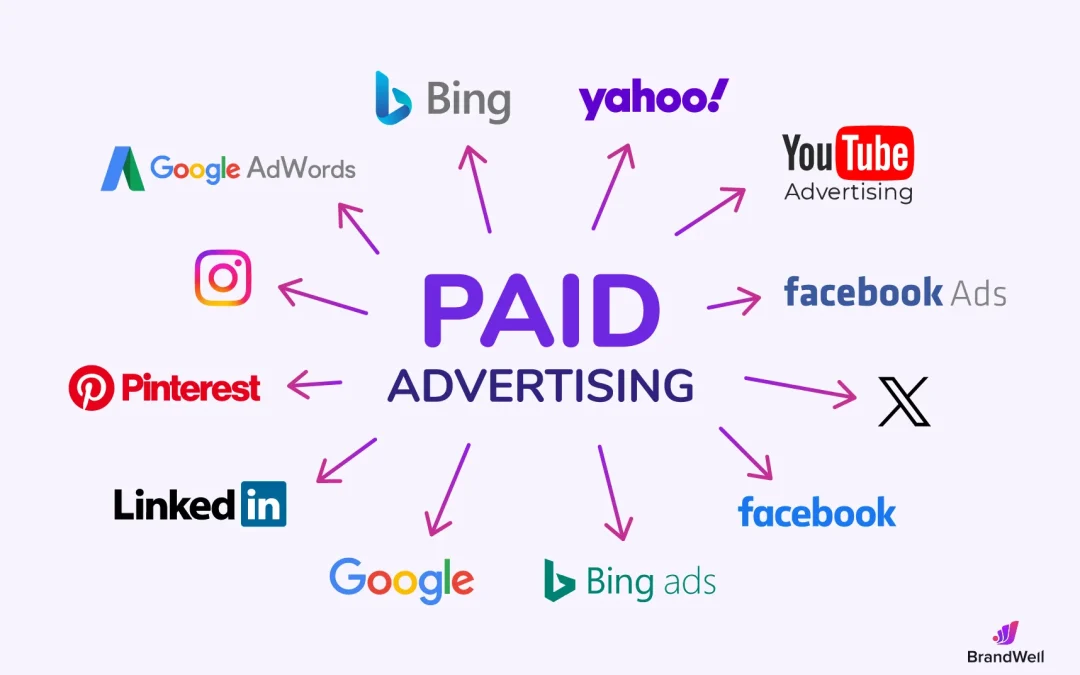
Organic social media can help a brand build visibility over time, but reaching the right audience is not always guaranteed. This is where paid social media advertising comes in.
Instead of relying entirely on organic reach, businesses can pay social platforms to display their content, offers, products, or services to selected audiences. With the right targeting and creative approach, paid advertising can help businesses generate awareness, website traffic, leads, sales, and valuable customer data.
But successful advertising is not simply about spending money on a post. It requires the right audience, objective, creative, budget, and measurement strategy.
What Is Paid Social Media Advertising?
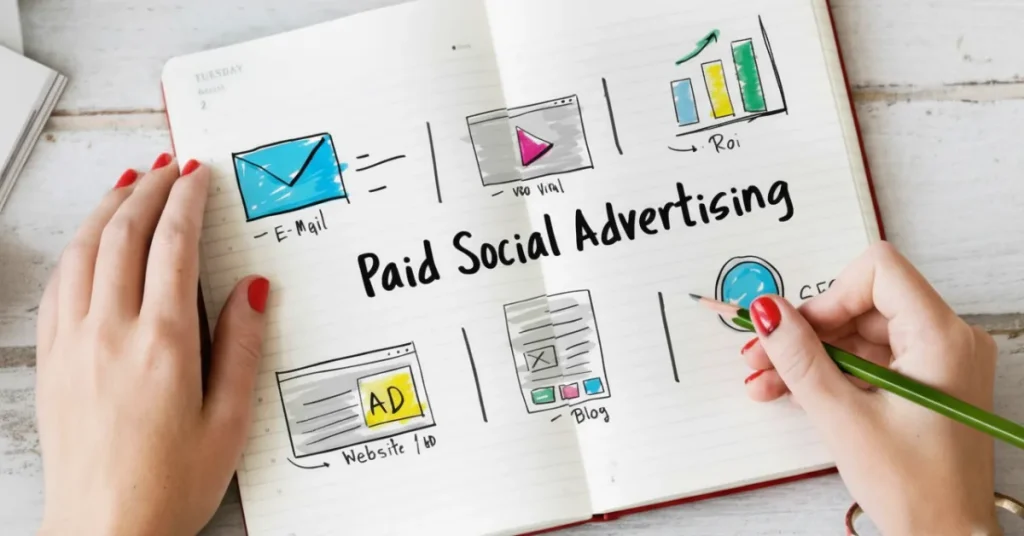
Paid social media advertising is the use of paid placements on social media platforms to reach a specific audience.
Businesses can create advertisements based on factors such as demographics, interests, behaviors, location, previous interactions, and other available targeting signals.
Unlike organic posts, which depend on a platform’s algorithm and existing audience, paid advertising gives businesses more control over who sees their content and when. Some of the common objectives include:
- Brand awareness
- Website traffic
- Lead generation
- App promotion
- Product sales
- Video views
- Engagement
- Conversions
Related Article: What Is Search Engine Marketing (SEM)? How Does It Work?
How Does Paid Social Media Advertising Work?
The basic process is straightforward.
- First, a business identifies what it wants the campaign to achieve. It might want more website visitors, qualified leads, product purchases, or simply greater awareness.
- Second, the advertiser selects a suitable audience, creates the advertisement, sets a budget, and chooses where and when the ad should appear.
- Third, the platform then delivers the advertisement to people it determines are more likely to take the desired action based on the campaign objective and available data.
- Lastly, performance is measured using metrics such as impressions, clicks, engagement, conversions, cost per result, and return on advertising spend.
This creates a cycle of launch, measure, learn, optimize.
Paid Social Media Ads vs. Organic Social Media
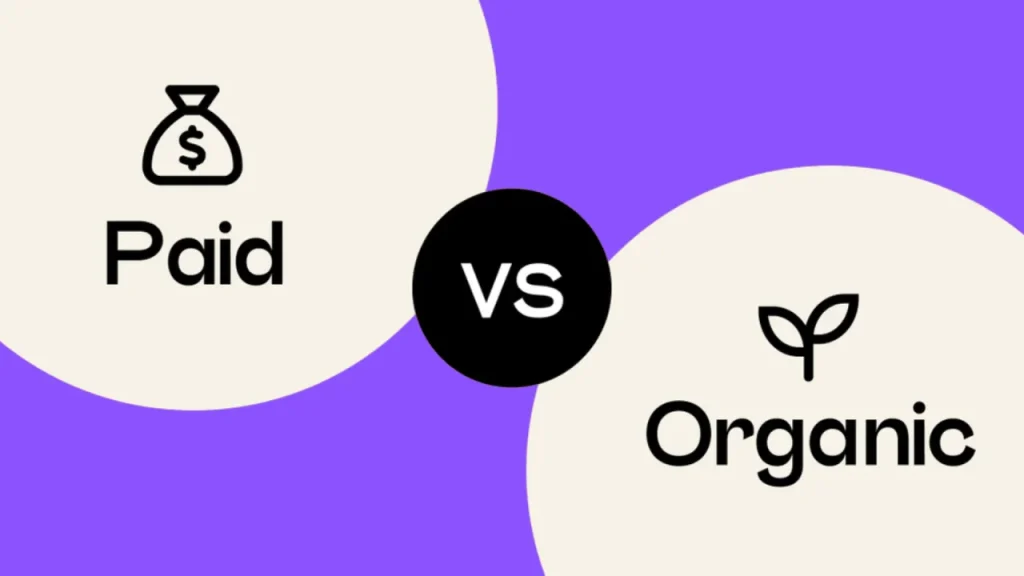
Organic and paid social media serve different purposes.
Organic social media involves publishing content without paying the platform for distribution. It is useful for building a brand presence, communicating with existing followers, sharing valuable information, and developing a long-term relationship with an audience.
Paid social media ads, on the other hand, are designed to extend reach and target specific audiences through paid placements. A strong social media strategy can use both.
Organic content can build credibility and community, while paid campaigns can help distribute important offers and messages to carefully selected audiences.
Popular Paid Social Channels
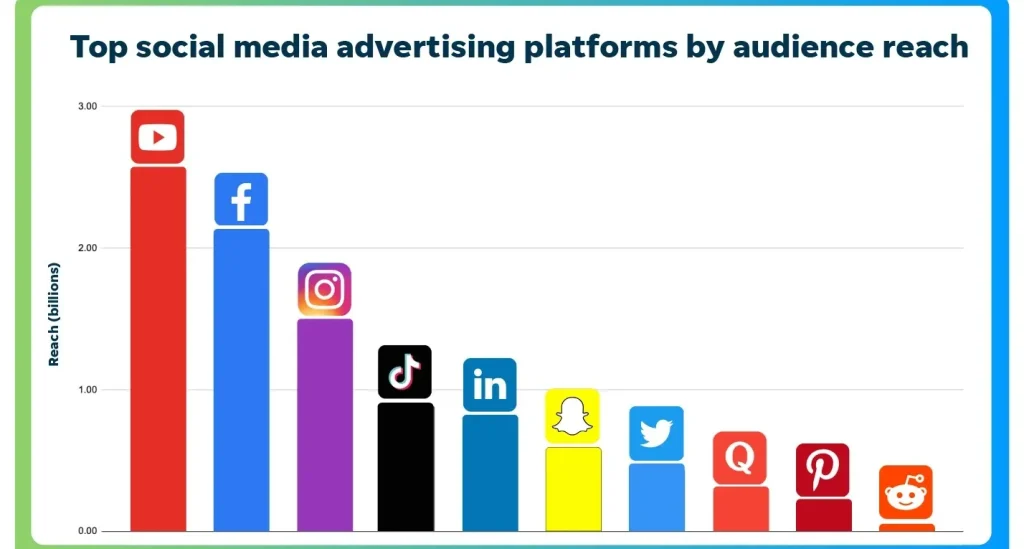
Businesses can advertise across several major paid social channels, although the right platform depends on the audience and business model.
Facebook and Instagram
Meta’s advertising ecosystem allows businesses to promote products, services, videos, lead forms, and other content across Facebook and Instagram.
These platforms can be particularly useful for businesses targeting consumers as well as certain B2B audiences.
LinkedIn advertising is particularly relevant for B2B companies, professional services, recruitment, and businesses targeting specific professional audiences.
Advertisers can build campaigns around professional characteristics and business-related audiences.
TikTok
TikTok offers businesses opportunities to reach audiences through short-form, highly visual creative.
Its advertising environment can work well for brands that can communicate their message through engaging video.
YouTube
YouTube combines social engagement with video advertising. Businesses can use video campaigns to build awareness, explain products, generate consideration, and support conversions.
The best platform is not necessarily the one with the largest audience. It is the one where your target audience and advertising objective overlap.
Types of Paid Social Media Campaigns
There are several ways businesses can structure paid social media campaigns.
Awareness Campaigns
These campaigns aim to introduce a brand, product, service, or message to a relevant audience. They are useful when the immediate goal is visibility rather than direct conversion.
Traffic Campaigns
Traffic campaigns are designed to encourage users to visit a website, landing page, article, or other destination.
They can be useful for businesses that need to move audiences from social platforms to owned digital properties.
Lead Generation Campaigns
Lead campaigns encourage potential customers to submit information such as their name, email address, or phone number.
For service businesses, lead generation can be particularly useful when the sales process requires a consultation or follow-up.
Sales and Conversion Campaigns
These campaigns focus on actions such as purchases, registrations, subscriptions, or other defined conversions.
They generally require strong landing pages, compelling offers, and accurate conversion tracking.
Retargeting Campaigns
Retargeting allows businesses to reconnect with people who have already interacted with their brand, such as website visitors or previous customers, where the platform and applicable privacy settings allow it.
Because these audiences have already shown some level of interest, retargeting can play an important role in moving potential customers further through the buying journey.
How to Build a Paid Social Media Advertising Strategy
A successful paid social media advertising strategy starts before the advertisement is created by focusing on:
- Defining the Objective
- Knowing Your Audience
- Choosing the Right Platform
- Creating Strong Ad Creative
- Writing Clear Ad Copy
What Makes Paid Social Posts Effective?
Your paid social posts need to compete for attention in environments where people are constantly scrolling. Effective creative usually has:
A strong opening: Give people a reason to stop scrolling.
One clear message: Do not try to communicate everything in one advertisement.
Visual clarity: Make the main point easy to understand.
Relevant value: Explain what the audience gets from taking action.
A clear CTA: Tell users what to do next.
Budgeting for Paid Social Media Marketing
There isn’t one universal advertising budget that works for every business.
Your budget depends on factors such as:
- Campaign objective
- Target audience
- Industry
- Geographic market
- Competition
- Average customer value
- Conversion rate
- Available creative
- Sales cycle
A smaller business can begin with a controlled test budget rather than immediately committing a large amount of money.
The goal of early testing is to learn which audiences, messages, creatives, and offers produce useful results. Once you identify promising combinations, you can make decisions about where the additional budget should go.
Measuring Paid Social Media Advertising Performance

Running advertisements without measuring performance is essentially guessing. Important metrics can include:
| Metric | What It Tells You |
| Impressions | How often ads were displayed |
| Reach | How many people saw the ads |
| CTR | How often people clicked |
| CPC | Average cost per click |
| CPM | Cost per 1,000 impressions |
| Leads | Number of generated prospects |
| Cost per lead | Average cost of each lead |
| Conversions | Desired actions completed |
| ROAS | Revenue generated relative to ad spend |
Common Paid Social Media Advertising Mistakes
- Targeting Everyone
- Using Only One Creative
- Ignoring the Landing Page
- Optimizing Too Quickly
- Focusing on Vanity Metrics
Benefits of Paid Ads on Social Media
There are several benefits of paid ads on social media, particularly when campaigns are strategically planned.
- Targeted Reach
- Faster Visibility
- Flexible Budgets
- Measurable Results
- Retargeting Opportunities
- Testing and Learning
Paid Advertising on Social Media: Is It Worth It?
Paid advertising on social media can be a valuable part of a digital marketing strategy, but spending money does not automatically produce results.
Success depends on the relationship between the audience, offer, creative, campaign objective, landing page, tracking, and optimization process.
A business with a clear offer and well-defined audience can use paid campaigns to generate measurable opportunities. A business without a clear proposition may simply spend more money showing an unclear message to more people.
Therefore, the objective should be to make every part of the advertising journey work together.
Final Thoughts
Paid social media advertising gives businesses a way to reach targeted audiences, test marketing messages, generate leads, promote products, and measure results at scale. But effective paid advertising is more than boosting posts.
It requires a clear objective, relevant audience, strong creative, persuasive messaging, appropriate targeting, accurate tracking, and continuous optimization.
When paid social media marketing is treated as a strategic process rather than simply an advertising expense, it becomes an important part of the broad customer journey.