

Social media is no longer just a place for businesses to publish occasional posts. Brands use platforms such as Instagram, Facebook, LinkedIn, TikTok, and YouTube to build awareness, communicate with customers, generate leads, and support sales. A social media marketing agency can manage the strategy, content, publishing, community engagement, advertising, and performance tracking needed to build a consistent social presence.
What Is a Social Media Marketing Agency?

A marketing agency is a company that helps businesses plan, create, manage, and improve their presence across social media platforms.
Depending on the agency and package, social media marketing services can include strategy development, social media content creation, account management, community engagement, paid advertising, influencer campaigns, and analytics.
The goal is not to increase followers. A well-planned social media presence should support bigger business objectives such as brand awareness, customer engagement, website traffic, leads, or sales.
Today, agencies often operate as an extension of a client’s marketing team, handling day-to-day execution while using data and strategy to improve performance over time.
What Does a Social Media Marketing Agency Do?
The exact services vary, but most professional agencies cover several important areas of social media marketing.
Develop a Social Media Marketing Strategy
Strategy comes before posting and an agency first needs to understand the business, target audience, competitors, existing social presence, and marketing goals. From there, it can develop a social media marketing strategy that determines what to post, where to post, who to target, and what the content should achieve.
A strategy may define:
- Target audiences and customer personas
- Suitable social media platforms
- Content themes and formats
- Posting frequency
- Brand voice and messaging
- Organic and paid campaigns
- Key performance indicators
This prevents social media from becoming a collection of disconnected posts.
Create Social Media Content
Content is one of the most visible parts of agency work. Social media content creation may include graphics, carousels, short-form videos, Reels, Stories, captions, educational posts, promotional content, and campaign creatives.
Good content should be adapted to each platform rather than simply copied and published everywhere. For example, a LinkedIn post may focus on professional insights, while Instagram may rely more on visual storytelling and short-form video.
Agencies may handle the complete production process, including content ideas, copywriting, graphic design, video editing, and content calendars.
Manage Social Media Accounts
Social media management involves keeping a brand’s accounts active, organized, and consistent. This can include:
- Creating and maintaining content calendars
- Scheduling posts
- Publishing approved content
- Optimizing captions and hashtags
- Managing multiple social profiles
- Maintaining brand consistency
- Monitoring account activity
Businesses often outsource these tasks through social media management services because consistent execution can require significant time and coordination. An agency may also establish approval workflows so the client can review content before it goes live.
Handle Community Management
Publishing content is only one side of social media. What happens after a post goes live is equally important.
A social media community management agency focuses on the conversations happening around a brand. This can involve responding to comments, answering direct messages, monitoring mentions, moderating discussions, and engaging with followers.
Community management can also help identify potential customers. Someone asking about pricing, availability, delivery, or a product feature may already have buying intent.
Therefore, effective community management combines customer service, communication, brand representation, and audience relationship-building.
Community Management vs. Social Media Management
These terms are closely related but not identical. Social media management covers the wide range of operation of social accounts, including planning, content, publishing, and reporting.
Community management focuses specifically on interacting with the audience through comments, messages, mentions, and conversations.
Run Social Media Advertising Campaigns
Organic content is not the only way businesses can reach audiences. A social media advertising agency can create and manage paid campaigns across platforms such as Meta, LinkedIn, TikTok, and other advertising networks.
Social media advertising services may include:
- Audience targeting
- Campaign setup
- Ad creative development
- Copywriting
- Budget management
- Retargeting
- A/B testing
- Conversion tracking
- Performance optimization
Paid campaigns can be designed for different objectives, including awareness, traffic, lead generation, engagement, and sales.
Track Performance and Provide Reports
Posting consistently does not automatically mean social media is working.
A professional social media marketing company should monitor performance and use the data to understand what is working and what needs improvement. Common metrics include:
| Metric | What It Shows |
| Reach | How many people saw the content |
| Impressions | How often content was displayed |
| Engagement | How audiences interacted with content |
| Engagement rate | Engagement relative to audience or reach |
| Click-through rate | How often users clicked |
| Leads | Potential customers generated |
| Conversions | Desired actions completed |
| Cost per lead | Advertising efficiency |
| Return on ad spend | Revenue generated relative to ad spend |
Reports may be delivered monthly or at another agreed timeframe. The most useful reports connect social media activity to actual business objectives rather than focusing only on follower growth.
Research Competitors and Industry Trends
A social media agency can also monitor competitors and industry conversations to identify opportunities. Competitor research may reveal:
- Which platforms competitors prioritize
- What content receives engagement
- Which topics appear repeatedly
- How competitors position their products
- What audiences respond to
- Where content gaps exist
This information can help shape a more differentiated social media marketing strategy.
Build and Maintain a Consistent Brand Voice
Consistency matters when customers encounter a business across multiple platforms. An agency may establish guidelines for tone, messaging, visual direction, captions, responses, and promotional communication.
For example, a financial company may need a professional and informative voice, while a lifestyle brand may use a more conversational approach. Consistency helps audiences recognize the brand and understand what it represents.
What Services Does a Social Media Marketing Agency Offer?
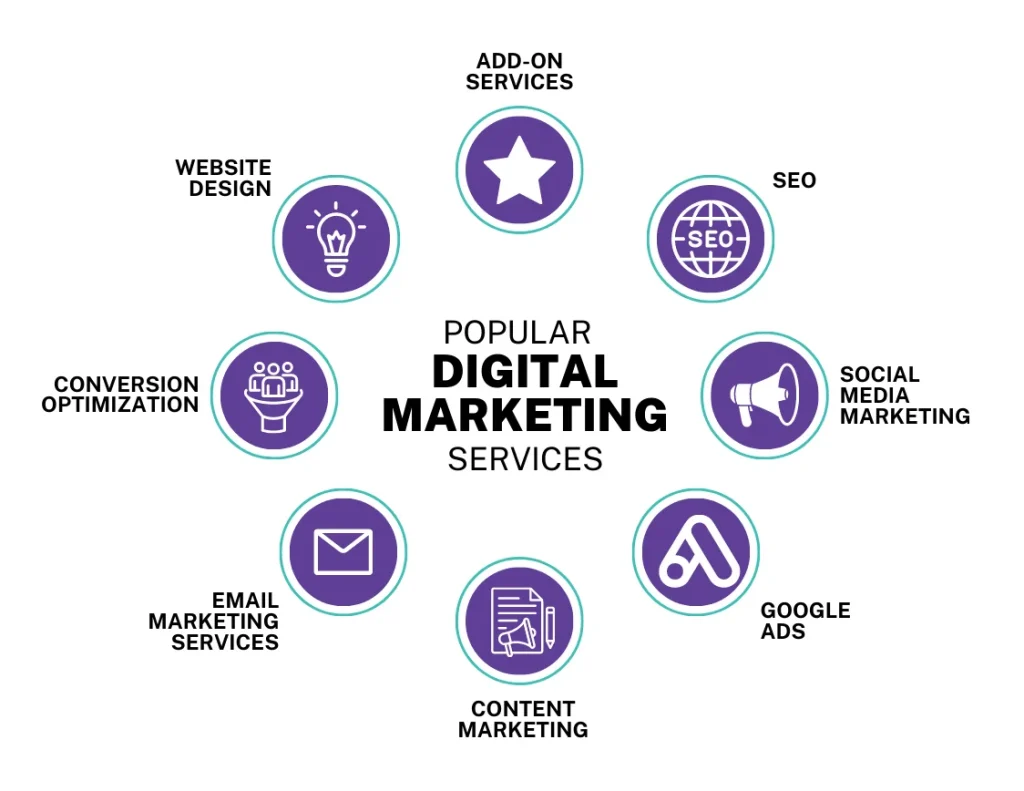
Depending on the agency, marketing agency services may include:
- Social media strategy
- Account management
- Content planning
- Social media content creation
- Copywriting
- Graphic design
- Video and Reels production
- Community management
- Social media advertising
- Influencer marketing
- Social media audits
- Competitor research
- Analytics and reporting
Not every agency offers every service. Some operate as full-service partners, while others specialize in areas such as paid advertising, content production, community management, or a specific industry.
How Does Social Media Marketing Work?
The process starts with research and strategy rather than content production. A workflow looks like this:
- Research
- Strategy
- Content Planning
- Creation
- Approval
- Publishing
- Community Management
- Advertising
- Analysis
- Optimization
First, the agency learns about the business and its customers. It then selects appropriate platforms and develops a strategy.
Second, content is created and approved before publication. Once posts go live, the team manages audience interactions and paid campaigns where applicable.
Lastly, performance data is reviewed to determine what should be continued, changed, tested, or improved.
What Are the Benefits of a Social Media Marketing Agency?
- Saves Internal Time
- Provides Specialized Expertise
- Creates Consistent Content
- Supports Paid and Organic Marketing
- Provides Measurable Insights
When Should a Business Hire a Social Media Agency?
There is no single point at which every business needs an agency. However, professional support may be suitable when a business:
- Does not have enough time to manage social media consistently
- Needs professional content creation
- Wants to launch or improve paid campaigns
- Is managing several social platforms
- Struggles to respond to comments and messages
- Needs a structured social media strategy
- Wants clearer performance reporting
- Has an internal marketing team that needs additional support
Conclusion
A marketing agency does much more than schedule posts. From developing a social media marketing strategy and creating content to managing communities, running advertising campaigns, and analyzing results, an agency can manage many of the moving parts behind a successful social presence.
The most important question when evaluating an agency for their social media management services is not what services it offers, but whether those services are designed around your audience, business goals, and measurable outcomes.
FAQs
1. What does a social media marketing agency do?
A marketing agency develops strategy, creates content, manages social accounts, engages communities, runs paid campaigns, and tracks performance.
2. What services does a social media marketing agency provide?
Some of the common services include social media strategy, content creation, account management, community management, social media advertising, competitor research, and analytics.
3. What is a social media community management agency?
A social media community management agency focuses on audience interaction, including responding to comments and messages, monitoring mentions, and building stronger customer relationships.
4. Is hiring a social media marketing agency worth it for a business?
It can help businesses save time, access specialized marketing skills, maintain consistent content, manage campaigns, and use performance data to improve their social presence.