
Search has become significantly more complex. Google continues to prioritize helpful, experience-driven content, while AI-powered search experiences are changing how users discover information. That is why studying successful SEO case studies is more valuable than ever. The best examples show that sustainable organic growth rarely comes from a single tactic.
1. The Technical SEO Case Study

One of the most overlooked reasons websites struggle to rank is technical SEO. A business can have excellent content and valuable products, but if search engines cannot crawl, understand, and index its pages, that content may never reach its potential.
In this technical SEO case study, imagine a growing SaaS website with hundreds of blog posts and product pages. Despite consistently publishing content, organic traffic remained stagnant.
The problem was not content quality alone. A technical audit revealed several issues:
- Important pages were not visible within the site architecture.
- Duplicate pages were competing with each other.
- Internal linking was inconsistent.
- Several valuable pages had indexing problems.
- Core pages loaded slowly on mobile devices.
Instead of immediately publishing more articles, the SEO team must focus on fixing the website’s foundation.
Related Article: What Is Technical SEO for SaaS in 2026?
The SEO strategy
The strategy included:
- Improving internal linking between related pages.
- Consolidating duplicate and overlapping content.
- Fixing crawl and indexing issues.
- Improving page speed and Core Web Vitals.
- Creating a clearer website hierarchy.
The result was that search engines could better understand which pages were important and how different topics were connected. This shows that before investing in new content, audit your existing website.
A technically healthy website gives every other SEO activity a better chance of succeeding. Sometimes, maximizing SEO performance starts with improving the assets you already have rather than creating more pages.
2. The Ecommerce SEO Case Study
Ecommerce websites often make one major mistake: they focus almost entirely on product pages.
Product pages are important, but category and collection pages frequently have greater potential to attract high-volume, commercial-intent searches.
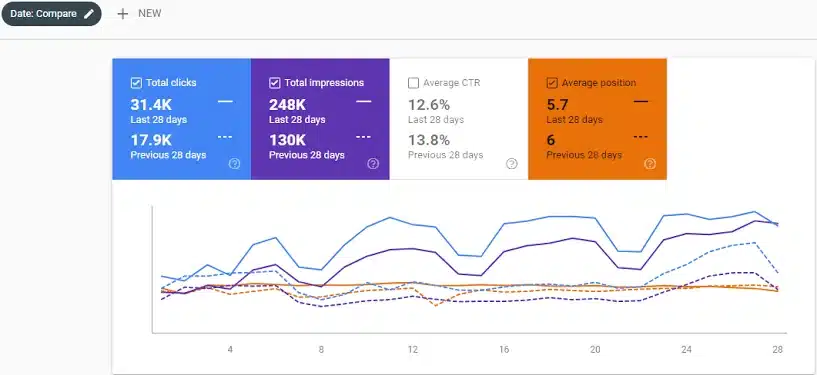
This ecommerce SEO case study demonstrates how an online retailer can turn underperforming category pages into major organic traffic drivers.
Initially, the website’s category pages contained only product listings and a short generic description. They offered little context for search engines or users. The SEO team changed the approach.
The SEO strategy
Each important category page was optimized around a specific search intent. Instead of stuffing keywords into the page, the content answered questions buyers naturally had:
- What is this product category?
- Who is it suitable for?
- What features should buyers consider?
- How do different options compare?
- Which products are best for specific needs?
The pages were also strengthened with:
- Clear headings and descriptive copy.
- Internal links to relevant subcategories.
- Frequently asked questions.
- Product comparison information.
- Structured data where appropriate.
Over time, these category pages became useful landing pages rather than simple product directories.
For ecommerce brands, SEO is not just about ranking individual products. Category pages can capture users earlier in the buying journey, especially those comparing options before making a purchase. A good ecommerce SEO strategy should optimize every stage of the customer journey, from start till the end.
3. The Small Business SEO Case Study

Many business owners assume they need a large marketing budget to compete in SEO. That is not always true. A strong small business SEO case study often proves that focus can outperform scale.
Consider a local service business competing against larger companies with bigger websites and more advertising resources. Instead of trying to rank for every possible keyword, the business focused on a smaller number of highly relevant searches.
The SEO strategy
The strategy included:
- Optimizing service pages around specific customer needs.
- Creating location-relevant content.
- Improving the Google Business Profile.
- Building local authority through relevant mentions and links.
- Publishing genuinely useful answers to common customer questions.
The content was written from the perspective of someone actually helping customers, not simply trying to attract search engines. For example, instead of publishing a generic article targeting a broad keyword, the business created detailed resources answering questions potential customers asked before contacting a provider.
This approach improved both search visibility and lead quality. Small businesses do not need to compete everywhere. They need to become highly relevant somewhere.
Focus on the services for SEO case studies, locations, and customer problems that matter most to your business. Search engines increasingly reward relevance and usefulness, which means a focused business can compete effectively against much larger websites.
4. The Content-Led SEO Case Study
For years, SEO content strategies were often built around individual keywords. In 2026, that approach alone is no longer enough.
Modern search engines and AI-powered systems are becoming better at understanding topics, entities, relationships, and context.
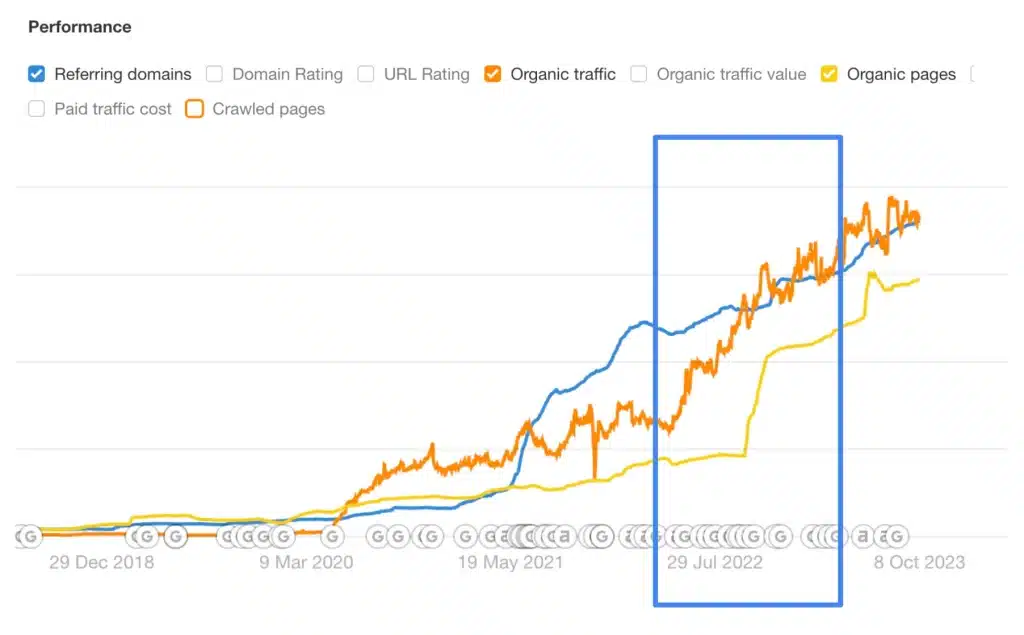
This blog SEO case study demonstrates the difference between publishing random keyword-focused articles and building genuine topical authority. A company operating in a competitive industry had dozens of blog posts. However, the articles were disconnected.
Several posts targeted similar keywords. Others covered unrelated subjects. There was no clear content structure. The solution was to reorganize the entire content strategy around topic clusters.
The SEO strategy
The team identified the major topics most relevant to the business and created:
- Comprehensive pillar pages.
- Supporting articles covering specific questions.
- Comparison content.
- Practical guides.
- Expert-led insights.
- Internal links connecting related resources.
That change transformed the content strategy. The website became easier for both users and search engines to understand. Keyword research is still important, but keywords should support a broader content strategy.
The most successful SEO case studies focus on topical depth, expertise, and usefulness. If your website consistently provides the best answers across an entire subject area, it has a stronger foundation for long-term organic visibility.
5. SEO Case Study for AI Search
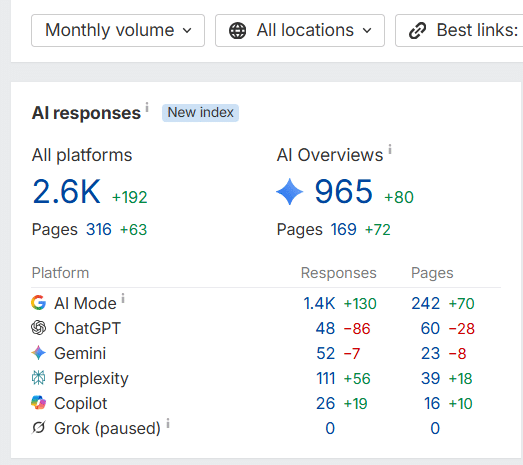
The biggest change affecting SEO case studies in 2026 is the growing importance of AI-powered search experiences. Users receive direct answers through AI-generated results, search summaries, and conversational search platforms.
This means ranking on a traditional search results page is no longer the only goal. Your content must also be easy for search engines and AI systems to understand, extract, and reference.
The SEO Strategy
The content was optimized around clear answers and structured information. This included:
- Answering important questions early
- Using descriptive headings
- Writing concise definitions
- Supporting claims with useful explanations
- Adding relevant FAQs
- Using structured data where appropriate
- Demonstrating genuine experience and expertise
For example, instead of burying the answer to an important question halfway through a 2,000-word article, the page provided a clear answer first and then explained it in greater detail. This structure improves the user experience while making content easier for answer engines to interpret.
What These SEO Case Studies Teach Us
- Understanding Search Intent
- Creating Helpful Content
- Maintaining Technical Health
- Building Authority Around Important Topics
- Optimizing for Modern Search
Final Thoughts
The best SEO case studies prove that sustainable growth does not come from shortcuts. It comes from understanding your audience, identifying the biggest opportunities on your website, and implementing a strategy that supports long-term visibility.
Whether you are running a small business, managing an ecommerce store, or growing a SaaS company, the fundamentals remain the same, which is to create useful content, maintain a technically strong website, understand search intent, and build genuine authority.
In 2026, the businesses that win at SEO will not simply focus on getting more rankings. They will focus on becoming the best possible answer for their audience, wherever that audience chooses to search.
FAQs
1. What makes a successful SEO case study?
A successful SEO case study clearly demonstrates a problem, the strategy used to solve it, and the measurable impact of those actions. The most useful case studies also provide practical lessons that other businesses can apply.
2. What is the most important SEO strategy in 2026?
There is no single strategy that works for every website. However, combining technical SEO, helpful content, strong topical authority, search intent optimization, and AI-search readiness provides a strong foundation for long-term growth.
3. How long does it take to see results from SEO?
SEO results vary depending on competition, website authority, technical health, and the strategy being implemented. Some improvements may produce results within weeks, while competitive SEO campaigns can take several months to show significant growth.
4. How can businesses optimize content for AI-powered search?
Businesses should create clear, well-structured, accurate content that directly answers user questions. Using descriptive headings, concise answers, relevant context, and strong expertise can improve visibility across both traditional and AI-powered search experiences.